After a Leak Is Found: First Steps to Limit Water Damage
Finding the leak is a relief, but it is not the end of the job. Water that has been escaping for days or weeks has already soaked into floors, walls, and whatever was stored nearby, and the hours right after discovery decide how much of that damage becomes permanent. These first steps are about limiting the spread while the repair is arranged.
- Practical homeowner guides
- Written by leak detection pros
- Sun City, AZ focused
Stop the Water First
Everything else waits until the water stops. If the leak is on a single fixture — a toilet, a sink, a fridge line — close that fixture's shutoff valve and the flow ends there. If the source is a pipe in a wall or under the floor, or you are not sure which line is feeding it, close the main shutoff valve for the house. The main valve is usually where the water line enters the home or at the meter, and every adult in the house should know where it is before a leak ever happens.
Once the water is off, open a tap at the lowest point in the house to drain what is left in the lines, then check the meter: with every tap closed, a still meter confirms the flow has stopped. Our shutoff valve guide shows where Sun City homes usually keep these valves and how to turn them.
Protect What the Water Can Reach
Water spreads sideways as well as down, so the next step is to move what it can reach. Lift rugs and roll them away from the wet area. Move furniture — even a few inches helps — and put wood legs on blocks or foil so they do not sit in water and stain the floor. Carry out boxes, electronics, and anything stored on the floor near the leak, and hang wet curtains or fabric where air can reach them.
Take photos as you go: the wet area, the leak's source, and anything that was damaged. Photos are useful for your own records and for any repair visit that follows, because they show how far the water reached before it was stopped. If the water is near electrical outlets, switches, or appliances, keep clear of it and switch off the affected circuit at the breaker panel before stepping in.
Start Drying Right Away
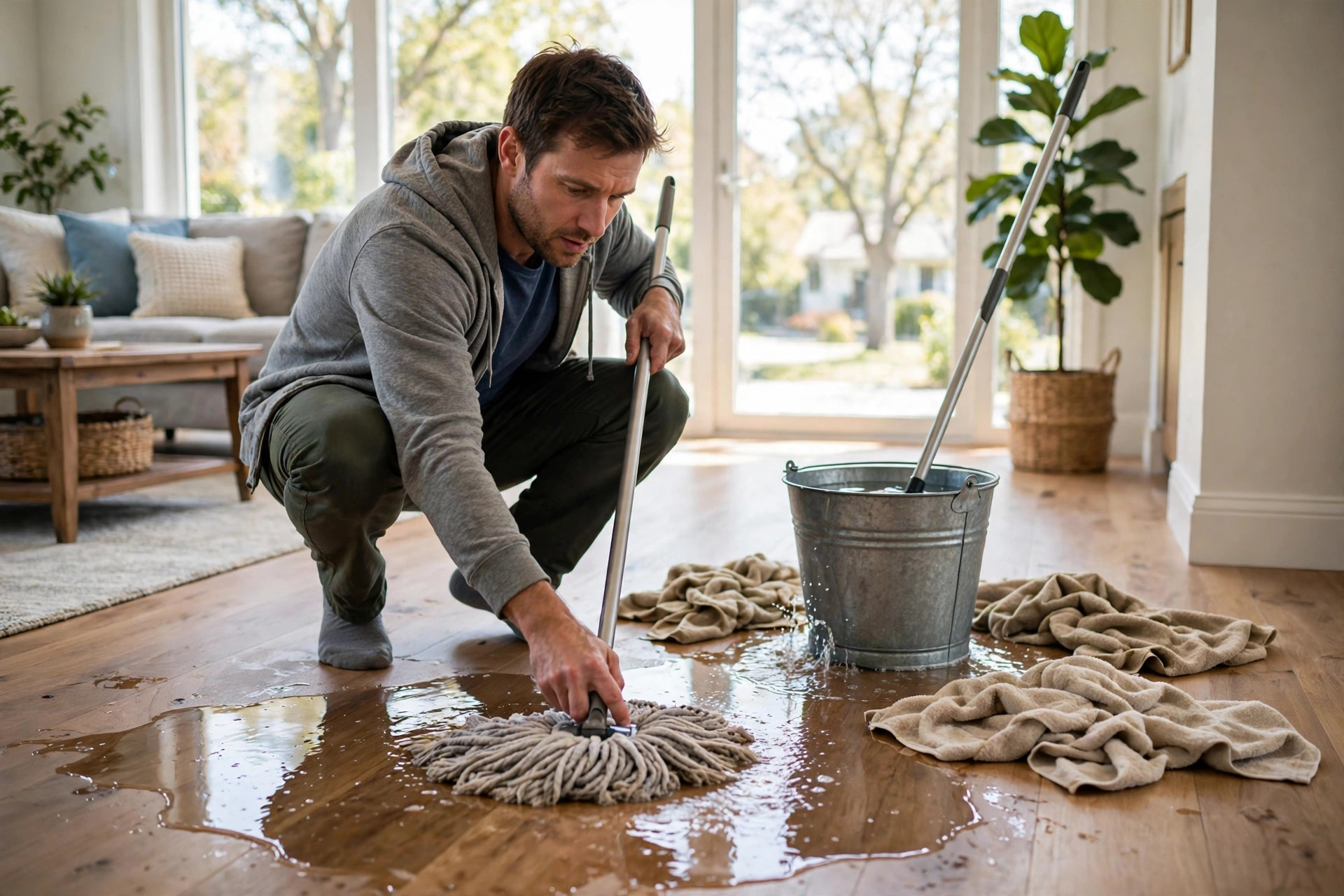
Drying starts the moment the water stops, and speed matters more than equipment. Mop up standing water, then press towels into the wet floor and wring them out, repeating until the towels come back barely damp. Open windows if the outside air is dry, run ceiling fans, and point any portable fan at the wet area. Pull up wet rugs and prop up soaked cushions so air reaches both sides.
Do not seal a damp room and hope for the best: trapped moisture is what turns a wet patch into a musty smell and, over time, into damaged flooring and softened drywall. Keep the air moving for at least a day after the surface feels dry, because the material underneath dries more slowly than the top. If the leak has been running for a while, the drying stage is longer — and that is normal.
What Not to Do After a Leak
A few common mistakes make a small leak worse. Do not ignore a damp patch because it looks small — water under flooring or behind a baseboard can be far wider than the visible stain. Do not paint over a water stain before the area is fully dry; the paint traps moisture and the stain bleeds back through. Do not use a hair dryer or a heat gun on a wet wall; concentrated heat can crack plaster and warp wood.
And do not switch a soaked appliance back on to test it. A washing machine, water heater, or fridge that has been standing in water needs to be checked dry before it runs again. If the water reached wiring or an outlet, leave the circuit off until it has been looked at. Patience in these first hours saves a second round of damage.
When the Leak Is Behind a Wall or Under the Floor
Surface drying is only half the job when the leak itself was hidden. Water from a wall pipe soaks insulation and drywall from the inside, and water from a slab line spreads under the flooring where a mop never reaches. The floor may feel dry on top while the material beneath is still wet, and that trapped moisture keeps working quietly.
That is where detection earns its keep a second time: confirming not just where the leak was, but how far the water travelled, so the drying and the repair cover the full area. Professional water leak detection can map that spread, and our guide on what to do if you suspect a water leak covers the first checks to run. Homes across the area, including Glendale, face the same hidden-water problem — if in doubt, ask before the drying stops. Our FAQ page explains how a visit works.
Frequently Asked Questions
How long does it take for a wet floor to dry?
A surface can feel dry in a day, but the material underneath — subfloor, drywall, insulation — takes longer. Keep air moving for at least a day after the surface feels dry, and longer if the leak ran for weeks.
Should I call someone before the area is dry?
No — call as soon as the water is stopped. A detection visit can confirm the full spread of the water while the repair is being planned, and early advice beats a second round of damage.
Can I use the room while it dries?
Yes, as long as the water is off, the area is safe to walk on, and no wiring or outlets were reached. Keep furniture off the wet patch and keep the air moving.
What if the water reached an electrical outlet?
Switch off the affected circuit at the breaker panel and keep clear of the water until it is checked. Do not use the outlet or switch the circuit back on while anything is still damp.
Leak Found — Now What?
Stop the water, protect what matters, and start drying while the repair is arranged.
(623) 270-6035 Request a Quote