Leak Detection for Sun City Businesses and HOA Properties
In a home, a leak gets noticed fast. In a shop, office, or HOA common area, it can run for weeks behind a wall, under a slab, or in an irrigation line nobody walks past. Here is how commercial leak detection works — and why it pays to check early.
- Practical homeowner guides
- Written by leak detection pros
- Sun City, AZ focused
Why Commercial Leaks Hide for Longer
Homes have someone in them all day; commercial buildings often do not. A shop closes at night, an office floor empties on weekends, and an HOA clubhouse may sit unused for days between events. A slow leak in a restroom wall, a storage room, or a seldom-used suite can therefore run for weeks before anyone sees a stain or smells dampness. Larger buildings also have longer pipe runs, more restrooms, and more joints and valves — more places for a leak to start, and more distance for the water to travel before it shows itself.
Warning Signs in Offices, Shops, and Restaurants
The signs are the same family as in a home, but they show up in commercial places. Watch for a restroom that always smells musty, a ceiling tile that stains or sags, paint bubbling on a shared wall, a floor that stays damp near a mop sink or ice machine, and a water bill that climbs without a change in business activity. In restaurants, check around dishwashers, ice machines, and mop sinks. In offices, pay attention to restrooms on lower floors, where a leak from above often appears first. A single musty room in an otherwise dry building is worth investigating, not airing out and forgetting.
HOA Common Areas: Irrigation, Pools, and Clubhouses
HOA properties add a whole second system: irrigation lines, pool plumbing, and clubhouse restrooms spread across common areas. Irrigation leaks are the quietest of all — a cracked lateral line can soak a planter bed for a whole season while the plants simply look healthy. Pool equipment rooms deserve regular looks too, since a slow equipment leak can run for months under a pump pad. Clubhouses combine both worlds: restrooms, kitchenettes, and laundry areas that see weekend bursts of use, then sit quiet. A monthly walkthrough of these spots catches most problems while they are still small.
How Commercial Detection Works Without Shutting You Down
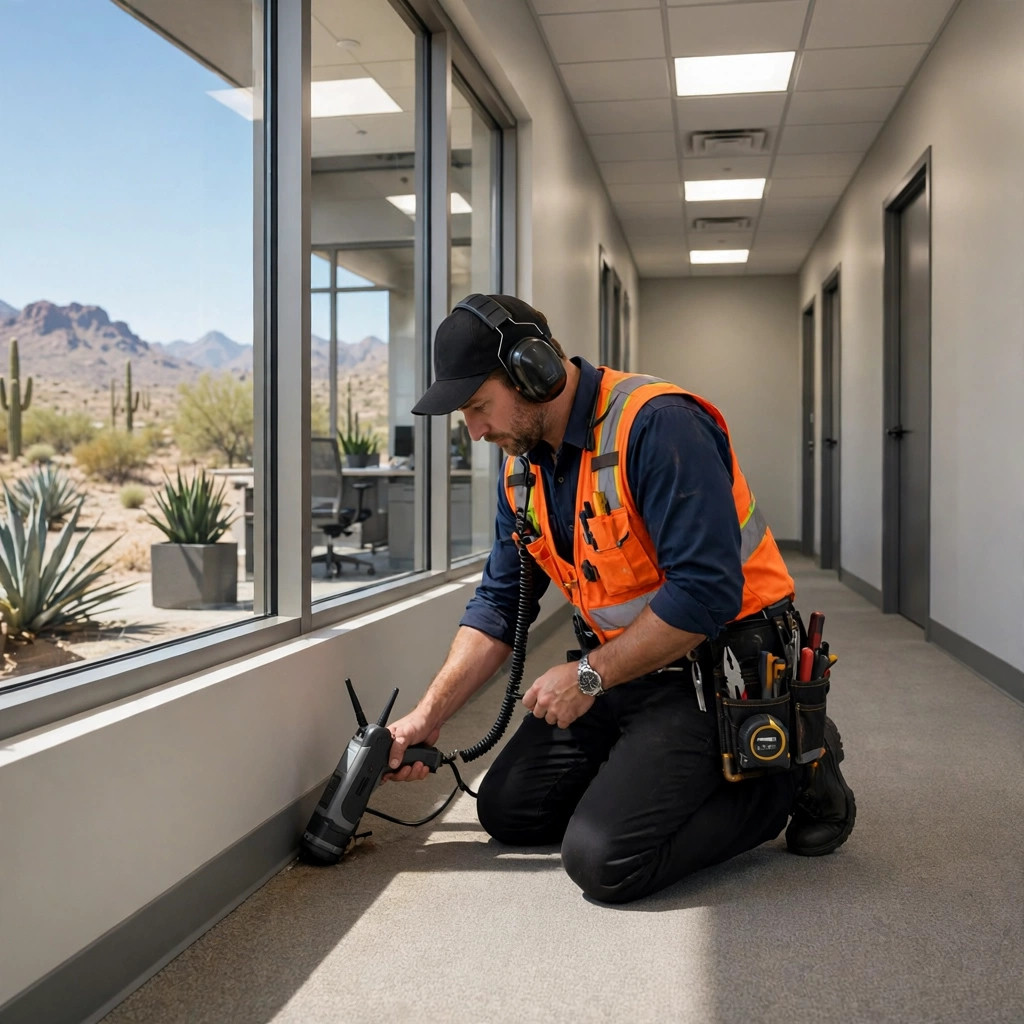
The biggest worry for a business owner is disruption, and modern detection is built to avoid it. Acoustic listening finds leaks through walls and slabs, thermal imaging shows temperature differences caused by dampness, and pressure testing isolates a faulty section of pipe — all without opening walls or closing the premises. Work can usually be scheduled around trading hours or quiet periods, and because the leak is pinpointed first, any repair stays limited to one area. That matters in a tenanted building, where tearing open a shared wall affects more than one business.
What to Do First When You Suspect a Leak
Start with the meter test on the building's main meter: shut off all known water use, then check whether the meter still moves. If it does, you have a leak somewhere in the system. Next, narrow it down floor by floor or zone by zone using isolation valves, and note every symptom with its location — which ceiling tile, which wall, which restroom. Photographs help a technician enormously, especially for stains that change over days. If water is actively pooling or a ceiling is sagging, shut off the nearest isolation valve and move stock, paperwork, or equipment out of the way before calling.
A Simple Checking Routine for Managers and Boards
A routine beats a rescue. Once a month, read the main meter and compare it with the previous month, walk restrooms and utility rooms for dampness or odour, and glance at irrigation zones during a watering cycle for soggy spots or broken heads. Once a quarter, check the pool equipment pad, the clubhouse kitchenette, and any rarely used suite. Keep a one-page log of meter readings and findings — patterns over months reveal a slow leak far earlier than a single reading ever will. When a reading jumps or a stain appears, that log also gives a technician a head start on the search, and our FAQ page answers common questions about detection visits.
Frequently Asked Questions
Can leak detection be done while our business stays open?
In most cases, yes. Acoustic and thermal detection are non-invasive and quiet, so work can usually be scheduled around trading hours or quiet periods, with the repair itself limited to the pinpointed spot.
Who should call — the tenant or the property owner?
Whoever first spots the signs should report them immediately, and the owner or property manager should arrange detection, since the pipework usually belongs to the building. Early reporting protects both the tenant's stock and the owner's property.
How often should an HOA check its common-area plumbing?
A monthly walkthrough of irrigation, pool equipment, and clubhouse restrooms, plus a quarterly look at rarely used areas, catches most slow leaks early. Meter readings taken monthly make the trend visible.
Is a musty smell alone enough reason to investigate?
Yes. A persistent musty smell in one room, especially near a restroom, kitchenette, or shared wall, often means dampness behind a surface. Investigating early keeps a small leak from becoming mould growth or structural damage.
Musty Room, Stained Ceiling, or Climbing Usage?
In a commercial building, a hidden leak affects more than one tenant. Call for precise detection that works around your business hours.
(623) 270-6035 Request a Quote