5 DIY Ways to Check for Water Leaks Before Calling a Professional
Not every high bill or damp spot means you need a specialist — yet. These five homeowner-friendly checks help you confirm whether you actually have a leak, and give you useful information to share if you do end up calling a pro.
- Practical homeowner guides
- Written by leak detection pros
- Sun City, AZ focused
1. The Water Meter Test
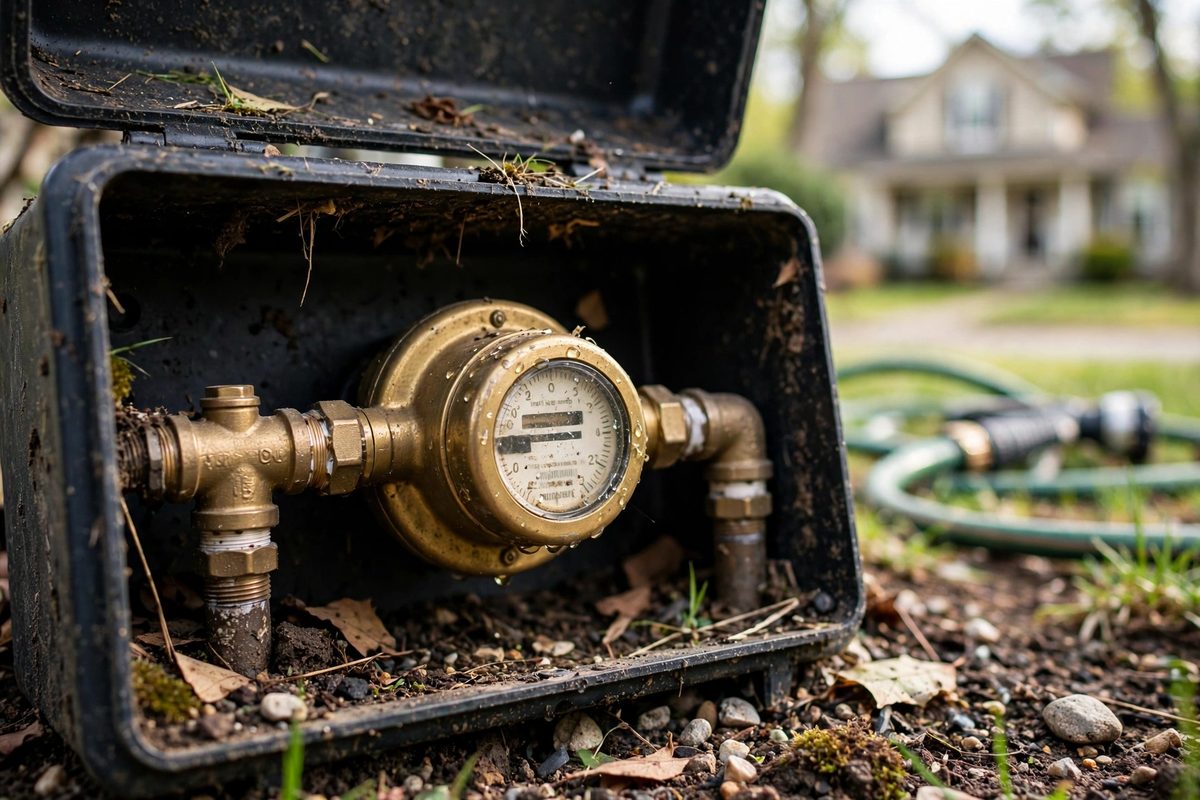
Your water meter is the most honest witness in the house. Here is how to run the test: turn off every water source — faucets, toilets (do not flush), dishwasher, washing machine, ice maker, and the irrigation controller. Then find your meter (usually in a ground box near the curb; you may need a screwdriver or a meter key to lift a stiff lid), note the reading, and wait at least 30 minutes — an hour is better for slow leaks. Many meters also have a small leak-indicator dial or triangle that spins with even tiny flows, so check that too. If the reading changes or the indicator moved, water is going somewhere. You have confirmed a leak; the next question is where. Jot down the start and end readings with the time — that record is genuinely useful if you later call a specialist.
2. The Toilet Dye Test
Toilets are the most common source of indoor water waste, usually from a worn flapper that lets tank water seep silently into the bowl. The test is simple: add a few drops of food coloring to the toilet tank (not the bowl), wait 15 to 20 minutes without flushing, then look in the bowl. Color in the bowl means the flapper is leaking. A running toilet can waste hundreds of gallons a day — often with no sound and no visible sign — so this two-minute test earns its place on the list.
3. Compare Your Water Bills
Pull out several months of water bills and compare usage, not just the total — look for the gallons or CCF (hundred cubic feet) figure. Compare the same month across years to account for seasons, and ask whether irrigation schedules or household habits actually changed. A steady climb with no explanation points to a slow leak; a sudden spike suggests something broke. Either way, keep the bills — or photos of them — handy when you talk to a detection specialist. The pattern helps narrow the search considerably.
4. Listen for Running Water
Wait for a quiet moment — late evening works well — turn off everything that uses water, and stand still in different rooms. Press your ear to walls near bathrooms, the kitchen, and the laundry area, and listen at the water heater. Hearing water moving, hissing, or trickling with nothing running is a strong sign of a pressurized leak, often in a wall or under the slab. Note where it sounds loudest; that detail helps a technician with acoustic listening equipment pinpoint it faster.
5. Inspect the Water Heater, Pool, and Yard
Water heater: look for rust streaks down the tank, moisture in the drain pan, drips at the temperature-and-pressure relief valve discharge pipe, and dampness on the floor around the base. Pool: run the bucket test — fill a bucket, set it on a pool step, mark the water level inside and outside the bucket, and wait 24 hours. If the pool drops noticeably more than the bucket, the pool is leaking, not just evaporating. See our pool leak detection page if it fails. Yard: walk the property for soggy spots that never dry, unusually green patches, or soft ground along the water line's path from the meter to the house.
6. Write Down What You Find
Whichever checks you run, keep brief notes: the date, the meter readings, which toilet failed the dye test, where you heard water running, and photos of any damp spots, stains, or soggy areas. This takes two minutes and does two things. First, it turns vague worry into a timeline — you will notice patterns, like the bill climbing every month since March, that memory alone misses. Second, if you do call a detection specialist, those notes tell them where to start, which shortens the visit and helps them bring the right equipment. A photo of a stain today is also your best evidence of how far it has spread a month from now.
7. When to Call a Professional
Call a detection specialist when the meter test confirms a leak but you cannot find the source; when you hear water running inside walls or under floors; when you see staining, warping, or new cracks; when a toilet or fixture fix does not stop the usage climb; or when the leak may be under the slab, behind walls, or underground — places where professional acoustic and thermal equipment finds the exact spot without tearing your home apart. Bring your notes and meter readings to the call: a good rule of thumb is that if your DIY checks point to a leak but not to its location, that is exactly what water leak detection specialists are for.
Frequently Asked Questions
How long should the water meter test run?
At least 30 minutes with everything off; an hour is better for catching slow leaks. Make sure irrigation, ice makers, and water softeners are off too — anything drawing water will give a false positive.
Can a running toilet really waste that much water?
Yes — a worn flapper can let hundreds of gallons a day slip silently from tank to bowl. It is one of the most common causes of an unexplained usage jump, and the dye test catches it in minutes.
My meter didn't move. Does that rule out a leak?
Not entirely. Very slow leaks, intermittent irrigation breaks, or leaks on lines that only run under certain conditions can pass a short test. If bills keep climbing or symptoms persist, run the test longer or have a specialist investigate.
DIY Checks Point to a Leak? Get a Precise Answer.
Confirming a leak is step one — finding its exact location is step two. Call for a professional diagnosis.
(623) 270-6035 Request a Quote