Refrigerator Water Line Leaks: Ice Maker and Fridge Supply Line Signs
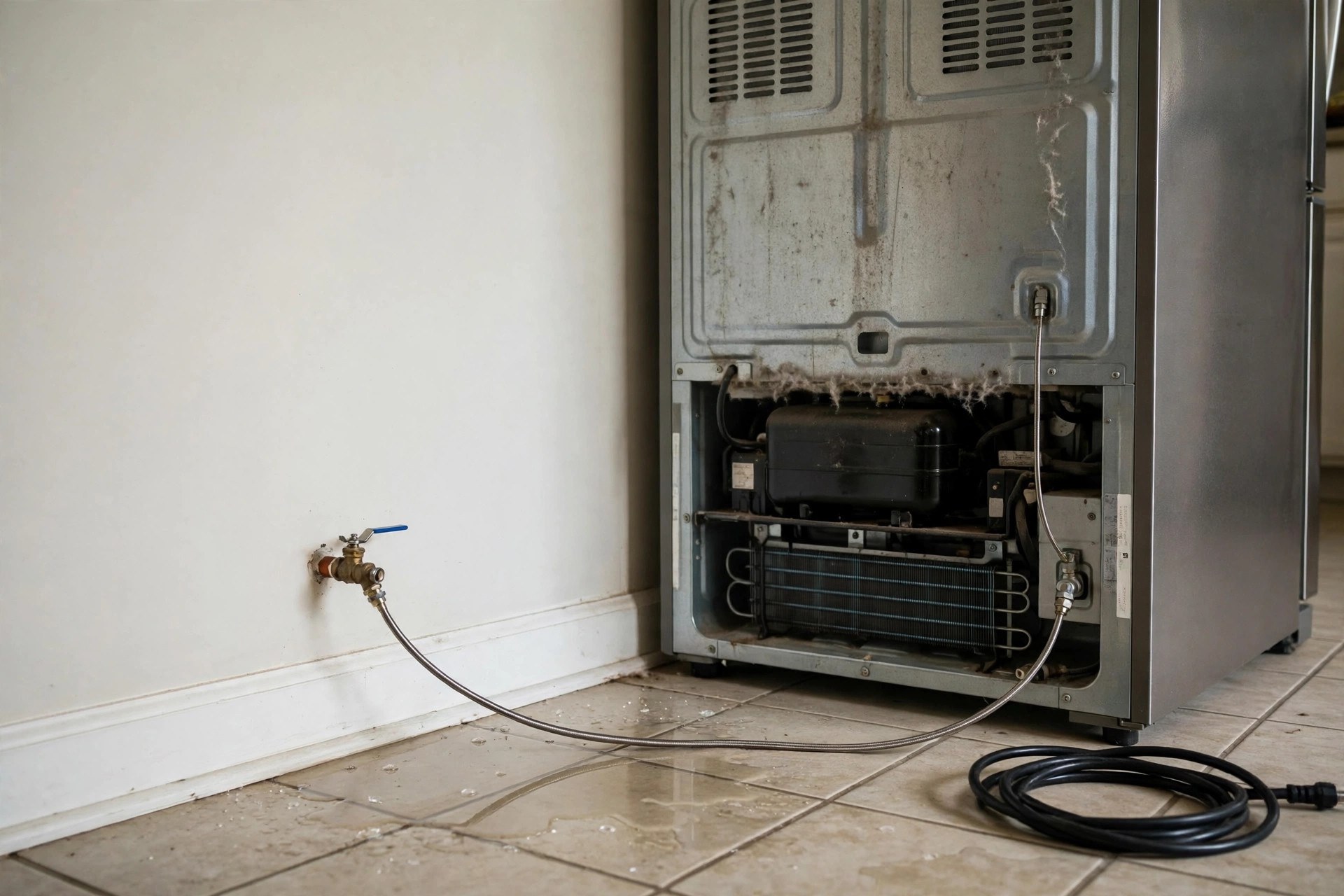
The water line behind a refrigerator is one of the thinnest pipes in the house, and it is also one of the least looked at. It feeds the ice maker and dispenser through a narrow plastic or copper tube from the wall valve to the back of the fridge — and when it fails, water spreads across the kitchen floor, under the cabinets, and into the subfloor before anyone thinks to look behind the appliance.
- Practical homeowner guides
- Written by leak detection pros
- Sun City, AZ focused
Where Fridge Water Lines Fail
A refrigerator water line has four usual failure points, and each behaves differently. The wall valve connection can weep at its seals, especially if it has not been touched in years. The line itself is the next suspect: plastic lines turn brittle with age and crack, while copper lines kink when the fridge is pushed back too hard and split at the kink. Inside the freezer, the ice maker inlet can drip, and at the front, the dispenser connection behind the door panel can leak down inside the door where nobody sees it.
The line's path is part of the problem. It runs behind the heaviest appliance in the kitchen, across a floor rarely lifted, carrying full household pressure whenever the valve is open. A pinhole releases only a trickle — but a trickle running day and night is exactly the kind of leak that warps flooring before it is noticed.
The Signs That Show Up First
The earliest sign is usually underfoot: a damp patch at the base of the fridge, or a floor that feels slightly soft or spongy near the appliance. Vinyl and laminate boards cup or lift at their edges when water gets underneath, and grout lines near the fridge may darken. A musty smell with no visible source is another early clue — water trapped under the fridge or cabinets has nowhere to dry.
Watch the pattern, too. A puddle that appears after the ice maker cycles, then slowly dries, points at the ice maker inlet or the line feeding it; a floor that stays damp all the time points at the valve or the line itself. The same habit of checking what hides behind appliances serves the whole kitchen — our kitchen leak guide covers the sink, dishwasher, and fridge lines that share the same room.
The Ice Maker's Own Warning Signs
The ice maker often reports a line problem before the floor does. Cubes that come out small, hollow, or misshapen mean the ice maker is not getting enough water — often because the line is kinked, partly blocked, or leaking before it reaches the mould. No ice at all, after normal production, can mean the same thing, especially if the dispenser still works.
Other signs are noisier: water dripping into the ice bin between cycles, a sheet of ice building up at the back of the freezer, or frost forming where it never used to. Any of these is worth a look behind the fridge before the next load of groceries goes in. A quick check now is far cheaper than a subfloor repair later.
What to Do When You Find a Fridge Leak
First, close the shutoff valve — usually on the wall behind the fridge, or under the kitchen sink on the line that feeds it. Turn it clockwise until it stops; that single step halts the water while you work out the rest. Then pull the fridge out carefully, straight back, without dragging it across a wet floor or yanking the line. Mop up what has pooled, and lift the kick plate to check whether water has reached under the cabinets.
Next, find the wet part: is the valve itself weeping, is the line cracked or kinked, or is the drip coming from inside the freezer at the ice maker inlet? A photo of the wet connection helps any repair visit. Do not keep running the ice maker on a leaking line — each cycle pushes more water through the failed part. If the source is not at the fridge at all but inside the wall or under the floor, professional water leak detection can confirm where the water is really coming from.
Keeping the Line in Good Shape
Fridge lines fail slowly, so a small routine catches them early. Twice a year, when you clean behind the fridge, look at the full run of the line: no kinks, no brittle or discoloured plastic, no green crust on copper fittings, and a valve that turns freely. Leave a little slack in the line so the fridge can be pulled out without pulling the connection tight, and never push the fridge hard against the wall — that kink is how many copper lines split.
Replace a plastic line that feels stiff or looks yellowed before it cracks, not after, and keep a note of the line's age the way you would for washer hoses. Homes across the area, including Peoria, run the same fridge setups, so the same ten-minute check pays off everywhere. If anything is unclear, our FAQ page explains what a detection visit can confirm.
Frequently Asked Questions
Can I still use the fridge if the water line leaks?
Yes — the fridge itself keeps cooling. Close the shutoff valve for the water line and stop using the ice maker and dispenser until the line is fixed. The food stays cold; only the water features are out of use.
Why is there water under my fridge but the line looks dry?
The leak may only run when the ice maker cycles, so the line can look dry between cycles. Check again right after a cycle, looking at the valve, the line, and the ice maker inlet in turn.
How often should I check the fridge water line?
A quick look twice a year is enough for most homes: when you clean behind the fridge, check the line, the valve, and the floor beneath for dampness or mineral crust.
Does a fridge leak damage the subfloor?
Yes, given time. A slow drip soaks the subfloor under the fridge and the cabinets beside it, warping boards and inviting musty smells. The sooner the line is shut off and the floor dried, the smaller the repair.
Water Behind the Fridge?
Find the shutoff, dry the floor, and trace the line before a slow drip reaches the subfloor.
(623) 270-6035 Request a Quote