7 Warning Signs of a Gas Leak Every Homeowner Should Know
Natural gas has no smell of its own — so your nose, your ears, and your eyes are your first line of defense. Here are the seven warning signs of a gas leak, and exactly what to do the moment you notice one. Read this now, before you ever need it.
- Practical homeowner guides
- Written by leak detection pros
- Sun City, AZ focused
1. A Rotten-Egg or Sulfur Smell
Natural gas is colorless and odorless in its natural state, so gas utilities add a chemical called mercaptan that smells like rotten eggs or sulfur. That smell is deliberate — it is the built-in alarm system. If you notice it near a stove, water heater, furnace, fireplace, or anywhere along a gas line, treat it as a real warning. Do not assume it will fade on its own or that it is "just the pilot light." A persistent sulfur smell means gas is escaping somewhere, and that is all you need to know to act.
2. A Hissing, Whistling, or Roaring Sound
A damaged gas line under pressure makes noise. Near an appliance, the meter, or an exposed pipe, listen for a distinct hissing or whistling — the sound of gas forcing its way through a crack or a loose fitting. Outdoors, a larger underground break can produce a low roaring sound. If you hear it, do not go hunting for the exact spot. The sound itself is your cue to leave the area.
3. Dead or Discolored Vegetation in a Line
An underground gas leak can kill the grass or plants directly above it while everything around them stays green. If a strip of your lawn or a row of shrubs turns brown or dies for no apparent reason — especially in a straight line running between your gas meter and the house — a leaking underground line is a strong suspect. In the desert landscaping common around Sun City, watch for the same pattern in gravel beds: a defined dead zone where nothing else has changed.
4. Blowing Dirt, Mist, or Bubbling Water Outdoors
Pressurized gas escaping underground can push dirt or dust into the air above the break, creating a small fountain of soil even on a calm day. In wet ground or standing water, you may see continuous bubbling that has nothing to do with irrigation. Either sight deserves immediate attention — observed from a safe distance, not up close.
5. An Unexplained Jump in Your Gas Bill
Just like water leaks, gas leaks often announce themselves on the bill before anywhere else. If your gas usage climbs without a change in habits, new appliances, or colder weather, gas may be escaping somewhere in your system. Compare several months of statements and look at usage (therms), not just the total — a slow, steady climb with no explanation is the pattern to watch for.
6. Headaches, Dizziness, or Nausea Indoors
Escaping natural gas displaces oxygen in enclosed spaces. If people or pets in the home develop headaches, dizziness, nausea, unusual fatigue, or eye and throat irritation — and the symptoms ease after leaving the house — take it seriously, especially if any of the signs above are also present. Do not try to "air the place out" while staying inside. Get everyone out first, then call for help from outside.
7. Visible Damage or Corrosion on Gas Lines
Exposed gas piping can corrode, and connectors can loosen over years of service — particularly on older appliances and outdoor lines exposed to Arizona's extreme heat. Rust, flaking, discoloration, or a connector that looks bent or stressed all warrant a professional look. Never tighten, adjust, or "just snug up" a gas fitting yourself.
What to Do the Moment You Suspect a Gas Leak
1. Leave immediately. Get every person and pet out of the house. Do not stop to open windows — just go. 2. Do not flip switches, use garage door openers, or plug or unplug anything. A tiny spark can ignite gas. 3. Do not light matches, candles, or cigarettes. 4. Do not use your phone or any electrical device inside the house or garage. 5. Once you are a safe distance away — across the street is a good rule — call 911 or your gas utility's emergency line (Southwest Gas serves most of the West Valley). 6. Stay out until professionals say it is safe to return.
Never Attempt a DIY Gas Repair
This deserves its own heading because it is the most important rule in this entire article: never try to find, tighten, seal, or repair a gas leak yourself. Gas work requires licensed professionals, permits, and pressure testing — one wrong move can turn a small leak into an explosion or fill a home with carbon monoxide. Even simple-sounding checks like brushing soapy water on fittings should be left to trained technicians with combustible-gas detectors. Your job is to notice the warning signs and get out. Everything after that belongs to the professionals.
When to Call a Gas Line Detection Specialist
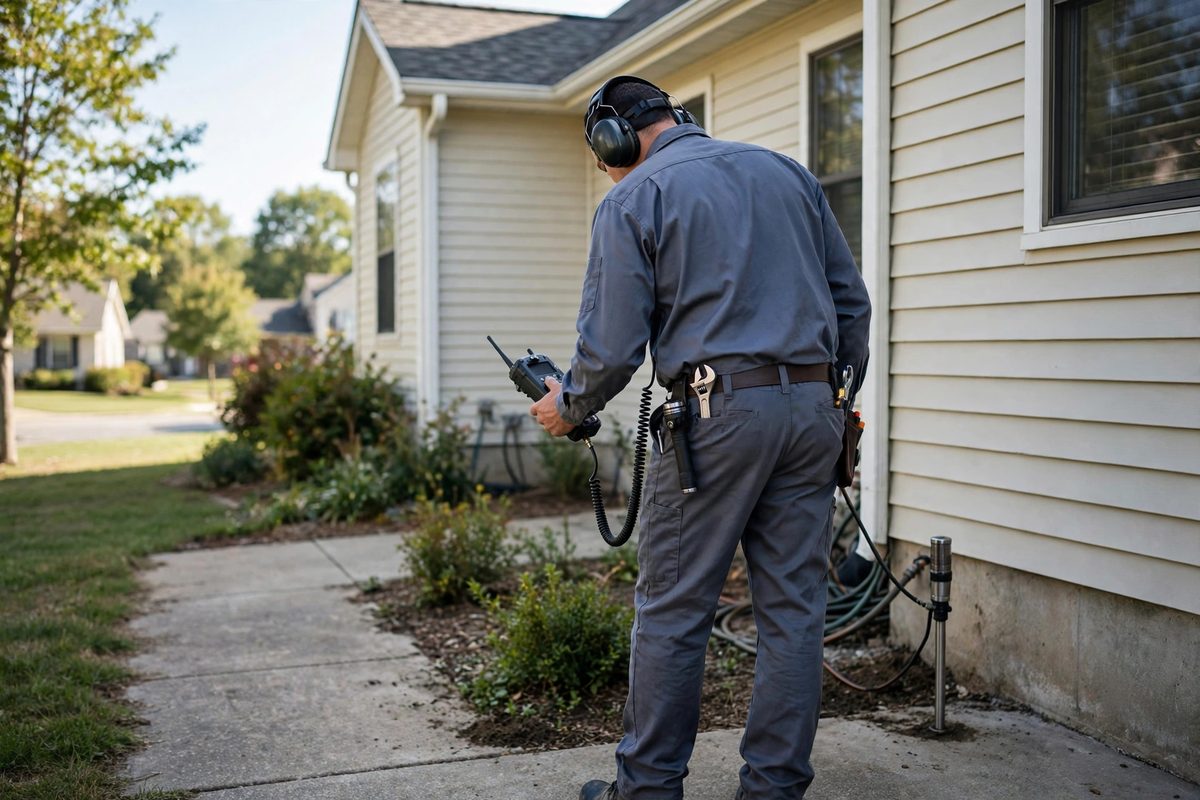
Once the immediate danger is cleared — the utility has shut off the gas and declared the area safe — you may still need to find exactly where the leak is before repairs can happen. That is where professional gas line leak detection comes in: technicians use combustible-gas detectors, line pressure testing, and tracer gas methods to pinpoint the break without unnecessary digging or demolition. And if you are dealing with a subtler situation — a faint recurring smell, a pilot light that will not stay lit, a bill that keeps climbing with no explanation — a detection visit can locate the problem before it ever becomes an emergency.
Frequently Asked Questions
What should I do first if I smell gas in my home?
Leave immediately — do not turn anything on or off, do not use your phone indoors, and do not try to find the source. Call 911 or your gas utility's emergency line from a safe distance outside, and stay out until professionals clear the home.
Can I use my phone to call for help from inside the house?
No. Phones and other electronics can create tiny sparks. Get outside first, then call from across the street or a neighbor's home.
How do professionals find a gas leak without tearing things apart?
With combustible-gas detectors, line pressure testing, and tracer gas techniques that follow the escaping gas to its source — methods that pinpoint the leak's location so repairs open as little as possible.
Smell Gas Right Now? Leave First.
Get out, stay out, and call 911 or your gas utility from a safe distance. For suspected slow leaks or post-clearance verification, our team can pinpoint the source safely.
(623) 270-6035 Request a Quote