Hard Water and Pinhole Leaks: Why Sun City's Mineral-Rich Water Wears Pipes Thin
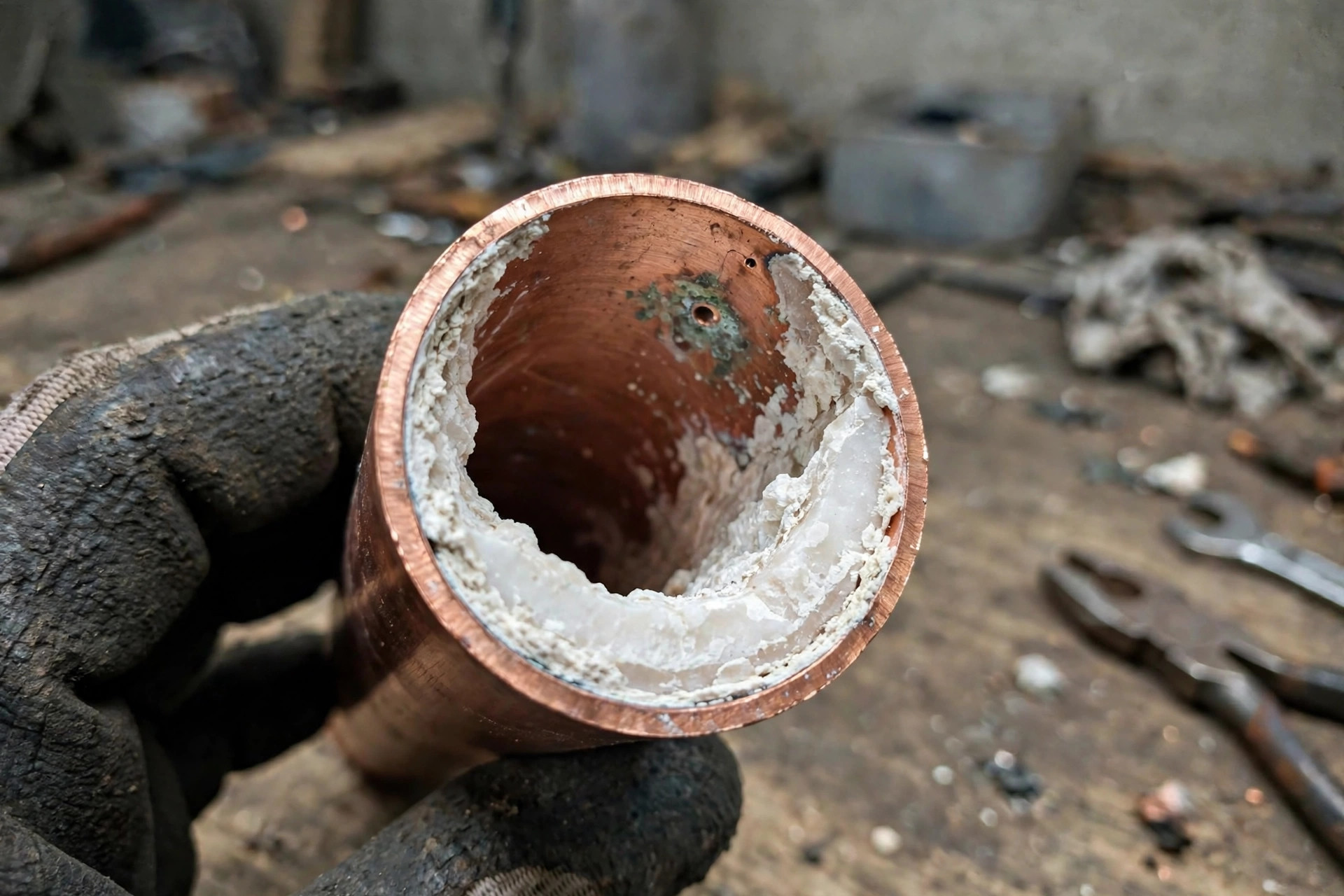
A pinhole leak is a tiny hole in a copper pipe, often no wider than a pinhead, that sprays a fine jet of water inside a wall or under a slab. In Sun City, hard water plays a central role in creating them: mineral-rich water leaves scale inside pipes, and that scale sets up the exact conditions for corrosion to eat through copper from the inside out.
- Practical homeowner guides
- Written by leak detection pros
- Sun City, AZ focused
What Hard Water Does Inside a Copper Pipe
Arizona water carries a heavy mineral load, and over years those minerals settle as scale on the inside of copper pipes. Scale itself is not the leak — the problem is what grows beneath it. Small deposits trap water against the pipe wall, creating tiny pockets where corrosion concentrates instead of spreading evenly. Over time, one pocket eats deeper than the rest until the pipe wall gives way at a single point: the pinhole.
That mechanism explains why pinhole leaks so often surprise homeowners. The pipe looks sound from the outside, water pressure seems normal, and there is no warning drip — until the hole opens and water starts spraying into a wall cavity or under flooring. Homes with older copper plumbing are the most exposed, and the risk rises with the age of the system, which is why the same homes that show other age-related issues also tend to develop pinholes. Our guide to pipe materials in Sun City homes explains which pipe types fail, and when.
The Signs of a Pinhole Leak Before the Damage Shows
A pinhole leak announces itself in small ways, if you know what to look for. A patch of wall that stays faintly damp, paint that bubbles or peels in one spot, a musty smell near a plumbing wall, or a warm spot on a floor above a hot-water line are all classic early signs. A water meter that creeps forward with everything off is another: a pinhole can lose a surprising amount of water through a hole you could cover with a fingertip.
Because the jet is fine and the hole is small, pinhole leaks can run for weeks before the damage becomes obvious — and that slow run is what makes them expensive. A damp patch dismissed as humidity, or a musty smell blamed on the season, gives the leak time to soak insulation, warp baseboards, and feed mould. Any damp spot that does not dry, or any smell that returns after cleaning, deserves a closer look rather than another coat of paint.
Why Sun City Homes Face Higher Risk
Two local factors stack the odds. First, the mineral content of Valley water is high, so scale builds faster here than in soft-water regions. Second, many Sun City homes were built in eras when copper was the standard, meaning the pipe stock is now old enough for corrosion to have done its slow work. Add desert temperature swings — hot days, cold winter nights — and pipes expand and contract against their fittings season after season, stressing already-thinned walls.
Water chemistry is not something a homeowner controls directly, and that is worth saying plainly: a pinhole leak is not a sign of neglect. It is a wear pattern of an ageing copper system in hard water. What a homeowner can control is how early it is found. Regular checks of plumbing walls, prompt attention to damp patches, and a meter test when anything seems off are the habits that catch a pinhole while it is still a small repair.
How Detectors Find a Hole You Cannot See
Finding a pinhole inside a wall is a job for equipment, not guesswork. Acoustic listening picks up the high-frequency hiss of water escaping under pressure, even through drywall; thermal imaging shows the cooler damp trail the jet leaves as it soaks the structure. Together they narrow the location to a small area, so the repair opening is measured in inches rather than feet.
That precision matters more than usual with pinhole leaks, because the hole itself gives so little away. A plumber opening a wall on the evidence of a stain alone may cut in the wrong place and still miss the jet. Professional thermal imaging leak detection maps the damp path first, and the opening follows the map. If your home is in Glendale or anywhere else in the West Valley, the same approach applies — the equipment does not care about the ZIP code, only about the water.
Living With Hard Water: Practical Steps
A water softener reduces the mineral load that drives scale, which helps new scale form more slowly — but it does not heal pipes that are already corroded, and it does not make an existing pinhole go away. Think of softening as slowing future wear, not as a repair. If your home already has ageing copper, the honest priority is inspection: check plumbing walls seasonally, run a meter test yearly, and act on damp patches immediately.
When one pinhole appears, ask a professional whether the system shows a pattern — multiple thin spots suggest a system reaching the end of its reliable life, while a single isolated hole may be just that. Either way, the first step is the same: pinpoint the leak, fix it, and dry the cavity properly. Our FAQ page covers what a detection visit involves and how long it usually takes.
Frequently Asked Questions
Can hard water really cause a pipe to leak?
Yes, indirectly. Mineral scale creates pockets where corrosion concentrates on copper, and over years that concentrated corrosion can eat a pinhole through the pipe wall.
Does a water softener stop pinhole leaks?
It slows future scale buildup, which helps, but it cannot repair pipes already thinned by corrosion. Existing leaks still need to be found and fixed.
How much water can a pinhole leak lose?
A surprising amount. A fine jet under household pressure can soak a wall cavity for weeks before the damage shows on the surface.
Are pinhole leaks covered by a meter test?
A meter test with everything off will usually show movement if a pinhole is active, which is why it is a useful first check for any suspected hidden leak.
Damp Patch That Will Not Dry?
A pinhole leak hides behind the wall while the damage spreads. Find it precisely before opening anything.
(623) 270-6035 Request a Quote