High Water Pressure: The Silent Strain on Your Pipes, Joints, and Appliances
Water pressure you cannot feel is still working on your plumbing around the clock. High pressure stresses joints, hoses, and appliance valves — and it is one of the most fixable leak risks in a home.
- Practical homeowner guides
- Written by leak detection pros
- Sun City, AZ focused
Appliances That Suffer First
High pressure shows up in appliances before it shows up in pipes. Washing machine hoses bulge and weep, dishwasher inlet valves drip, toilet fill valves run or hiss, and water heater relief valves weep — each one a small symptom of the same strain. Ice maker lines and fridge water lines are thin and age fast under high pressure, which is why a fridge line drip often appears in a high-pressure home before any pipe joint fails. If two or more appliances develop valve or hose problems in the same year, check the pressure before replacing the second one: fixing the pressure protects the replacement, while replacing parts one by one leaves the cause in place.
Finally, recheck pressure after the regulator is fitted or replaced, and again a few months later. A regulator that holds steady protects the whole house; one that drifts back up needs attention before it quietly stresses joints and hoses all over again.
What High Pressure Does to Plumbing
Every joint, hose, and valve in a home is built for a normal pressure range. Above that range, seals wear faster, supply hoses bulge, toilet fill valves run, and small weaknesses in old joints become leaks. The damage is gradual: a joint that would have lasted years starts weeping, a washer hose that would have held gives way sooner, and an appliance valve that should have lasted fails early. High pressure rarely causes a dramatic burst on its own — it quietly shortens the life of everything downstream.
Warning Signs Around the House
Watch for banging or knocking pipes when taps close, toilets that run or refill on their own, faucets that spit or spray harder than they used to, and supply hoses or connections that weep. A water heater relief valve that drips, or fixtures that wear out unusually fast, can also point to pressure above the normal range. Any one sign is worth a pressure check; two together make it urgent.
Checking Pressure Takes Minutes
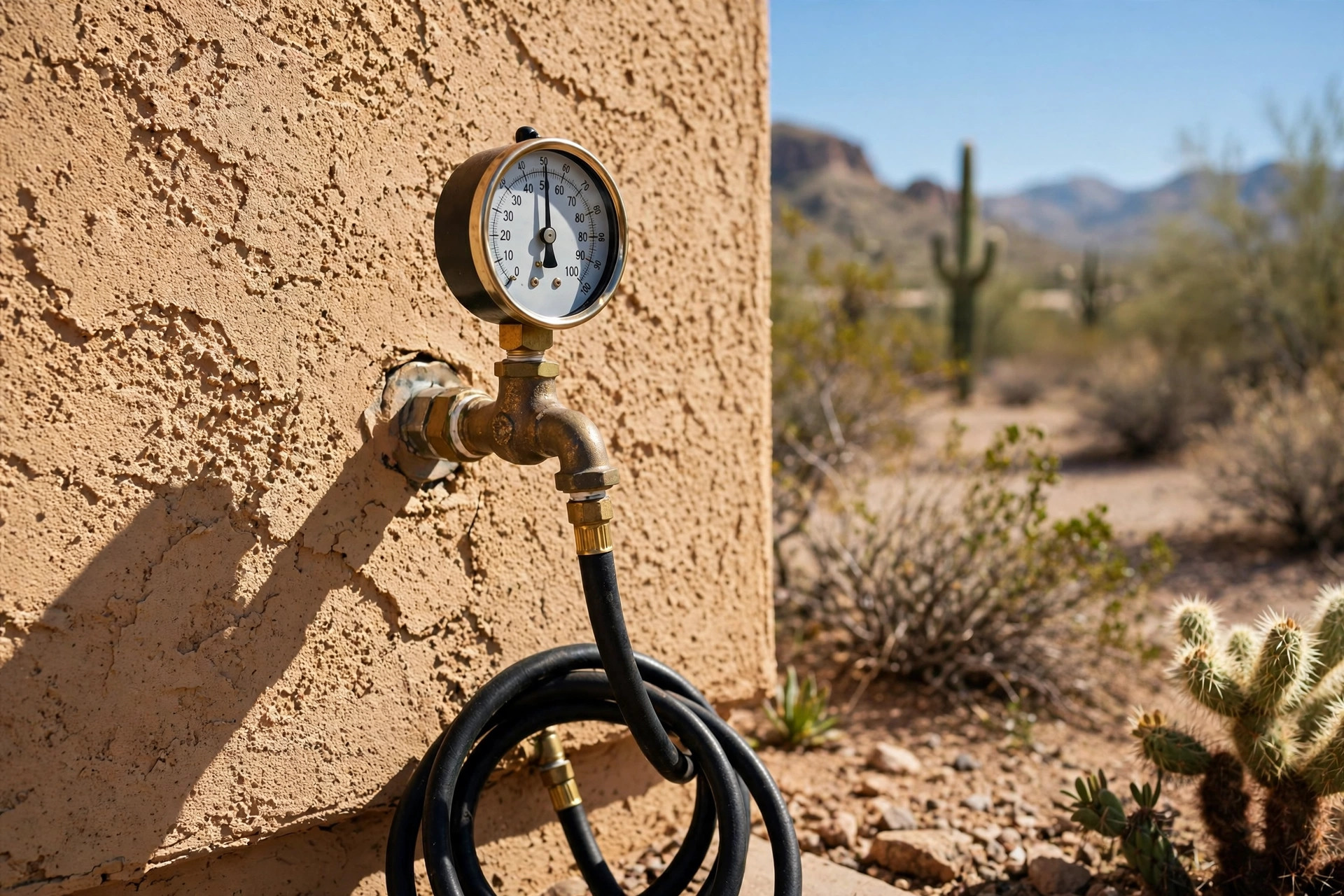
A simple screw-on gauge on an outdoor faucet reads household pressure directly. Test when no water is running elsewhere in the house, and test again at a different time of day, because municipal pressure can vary. If readings sit consistently high, a pressure regulator at the main line brings the whole house back into the normal range. If your home already has a regulator, it can wear out — a regulator that no longer regulates shows the same high readings as having none at all.
High Pressure and Hidden Leaks
High pressure makes small leaks worse and new leaks more likely, especially in older homes where joints are already aged. If your meter test shows water escaping with everything off, or dampness keeps appearing at joints and appliance connections, pressure may be the force behind it. A water leak detection check finds the leak itself, and a pressure check finds the strain that caused it. For older homes, our older-home pipe guide explains which materials wear first. Our FAQ page covers what a detection visit looks like.
A Check Worth Adding to Your Routine
Check pressure once a year and after any plumbing work on the main line. It is the cheapest leak prevention a homeowner can do, because it protects every joint and hose in the house at once.
Frequently Asked Questions
What are the signs of high water pressure?
Banging pipes, toilets that run on their own, faucets that spray harder than usual, weeping supply hoses, and fixtures that wear out fast.
How do I check my home water pressure?
Screw a pressure gauge onto an outdoor faucet and read it with no other water running. Test at two different times of day for a reliable picture.
Can high pressure cause leaks by itself?
It stresses seals, joints, and hoses so they fail sooner. It rarely bursts a healthy pipe alone, but it turns small weaknesses into leaks.
What if my home already has a regulator?
Regulators wear out. If readings stay high, the regulator itself may need replacing — it is a normal maintenance item.
Banging Pipes, Running Toilets, or Weeping Hoses?
High pressure strains every joint in the house. Call for precise detection of the leak it may already have caused.
(623) 270-6035 Request a Quote