Laundry Room Leaks: Washing Machine Hoses, Drains, and Shutoff Habits
A washing machine moves a lot of water in every cycle, and its hoses sit under pressure whenever the machine is connected. A failed hose can release that water fast — here is how to keep the laundry room dry.
- Practical homeowner guides
- Written by leak detection pros
- Sun City, AZ focused
Detergent, Softener Lines, and Utility Sinks
If the laundry room has a utility sink, check its trap and supply lines with the same care as the washer hoses — a utility sink trap dries out or loosens just like any other, and its drips hide behind stored supplies. Detergent and softener dispensers can also leak at their connections, leaving a sticky residue that attracts dust and masks a slow drip. Keep the area behind and beside the machine clear enough to see the floor: boxes stacked against the wall hide the first damp patch, and by the time the dampness reaches open floor, the wall base has been wet for weeks. A clear floor and a quick look behind the machine twice a year are the whole routine, and they catch the leaks that storage hides.
Supply Hoses Are the Weak Point
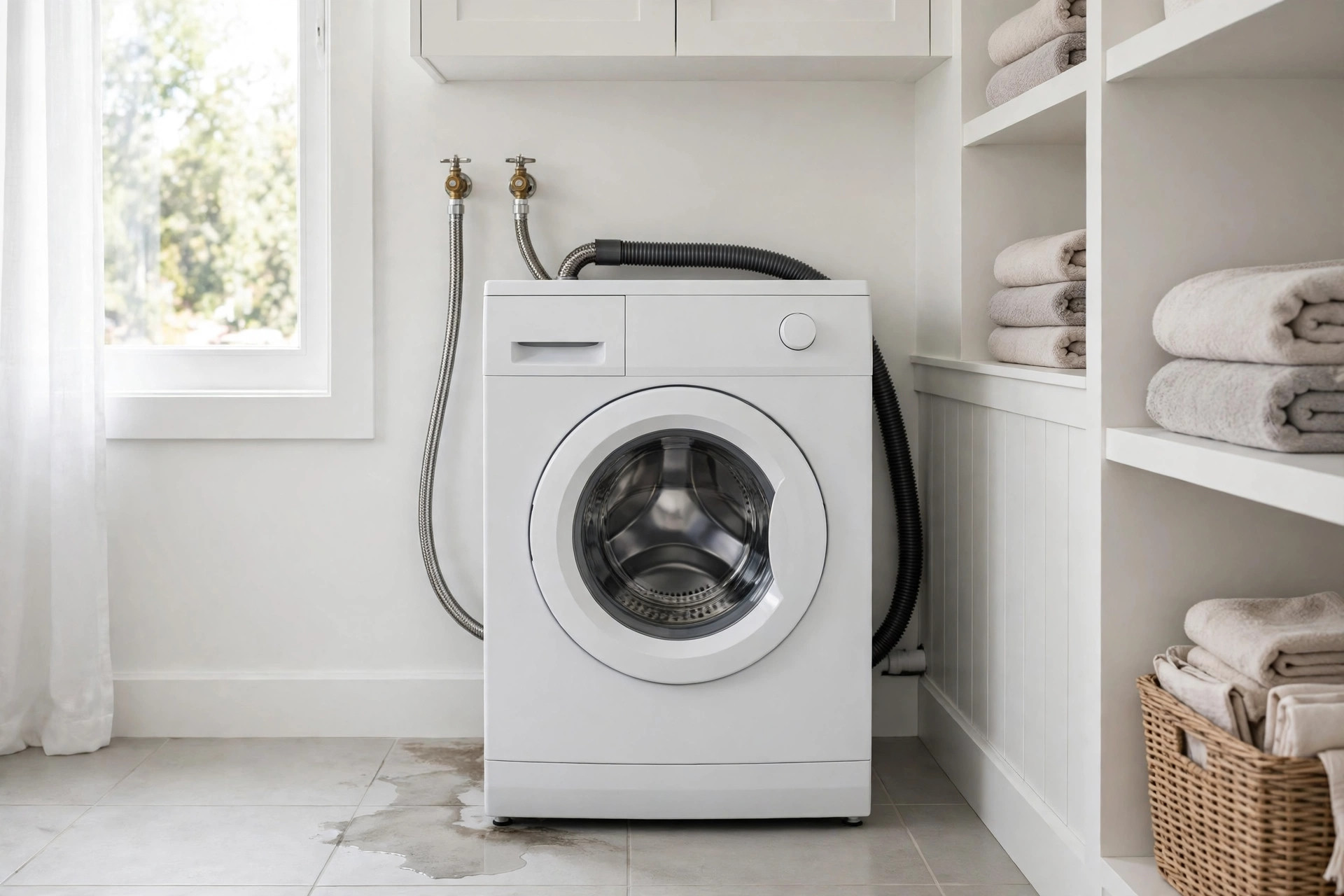
Rubber washing machine hoses age, and desert heat in a garage laundry room ages them faster. Check both hoses where they meet the machine and the wall valves: look for bulges, cracks, brittleness, or mineral deposits at the connections. Braided stainless hoses last longer than plain rubber, but they are not permanent either — replace any hose that looks swollen, stiff, or discoloured, and replace both hoses together even if only one looks worn. A hose that fails while you are out can run for hours, so this small check matters more than most.
The Drain Hose and Standpipe Deserve a Look
The drain hose can slip out of the standpipe, kink behind the machine, or develop a slow leak at its connection. Watch for water on the floor after a cycle, dampness on the wall behind the machine, or a musty smell in the laundry room. Pull the machine out carefully once or twice a year and look behind it: a damp wall, a stained floor, or a hose that has worked loose are all easy to fix once seen. A water leak detection check can help when dampness near the laundry room has no obvious source.
The Shutoff Habit That Prevents Floods
Every laundry room has shutoff valves for the washer supply lines. Turn them off when the machine is not in use, especially before a trip — it takes five seconds and removes the most common laundry flood source entirely. Turn the valves twice a year to make sure they still move; a seized valve is useless when you need it. Label the valves so anyone in the house can find them quickly. The same habit works for the whole house: our water shutoff valve guide shows where the main shutoff usually sits in Sun City homes.
Floor and Wall Clues Around the Laundry Room
Laundry leaks show in the finishes before they show as puddles: flooring that curls near the machine, baseboards that swell, paint bubbling on the shared wall, or a musty smell that survives cleaning. In Sun City, many laundry rooms sit on a slab, so a leak that reaches the slab can travel and appear as dampness in the next room. If the source is unclear, a slab leak check can rule the slab in or out without guesswork.
When to Call for Detection
If dampness keeps returning after you have replaced hoses and checked connections, or your meter test shows water escaping with everything off, the leak may sit in a wall or under the slab rather than in the machine. Our FAQ page explains what a detection visit looks like, so you know what to expect before anyone arrives.
Frequently Asked Questions
How often should washing machine hoses be replaced?
Inspect them twice a year and replace any hose that is bulging, cracked, stiff, or discoloured. Many homeowners replace both hoses on a regular schedule rather than waiting for one to fail.
Should I turn off the washer valves between loads?
Turning them off when the machine is not in use, and always before a trip, removes the most common laundry flood source. It takes seconds and costs nothing.
Can a drain hose leak without a puddle?
Yes. A slow drain leak can soak into the wall or flooring behind the machine, showing only as dampness, swelling, or a musty smell.
Is a laundry leak on a slab harder to find?
It can travel sideways under the slab and surface in another room. Acoustic listening and thermal imaging pinpoint it without opening floors at random.
Wet Laundry Room Floor or Musty Smell Near the Washer?
Washer hoses and drains fail quietly. Call for precise detection before a slow drip becomes a flood.
(623) 270-6035 Request a Quote