Leak Detection Technology: Acoustic, Thermal, and Tracer Gas Explained
A hidden leak gives away almost nothing on the surface — a warm patch of floor, a faint hiss, a meter that will not sit still. Finding it without tearing the house apart takes technology, and three methods do most of the work: acoustic listening, thermal imaging, and tracer gas. Each one reads a different clue, and knowing what each does explains why a good detection visit often uses more than one.
- Practical homeowner guides
- Written by leak detection pros
- Sun City, AZ focused
Acoustic Listening: Hearing the Leak
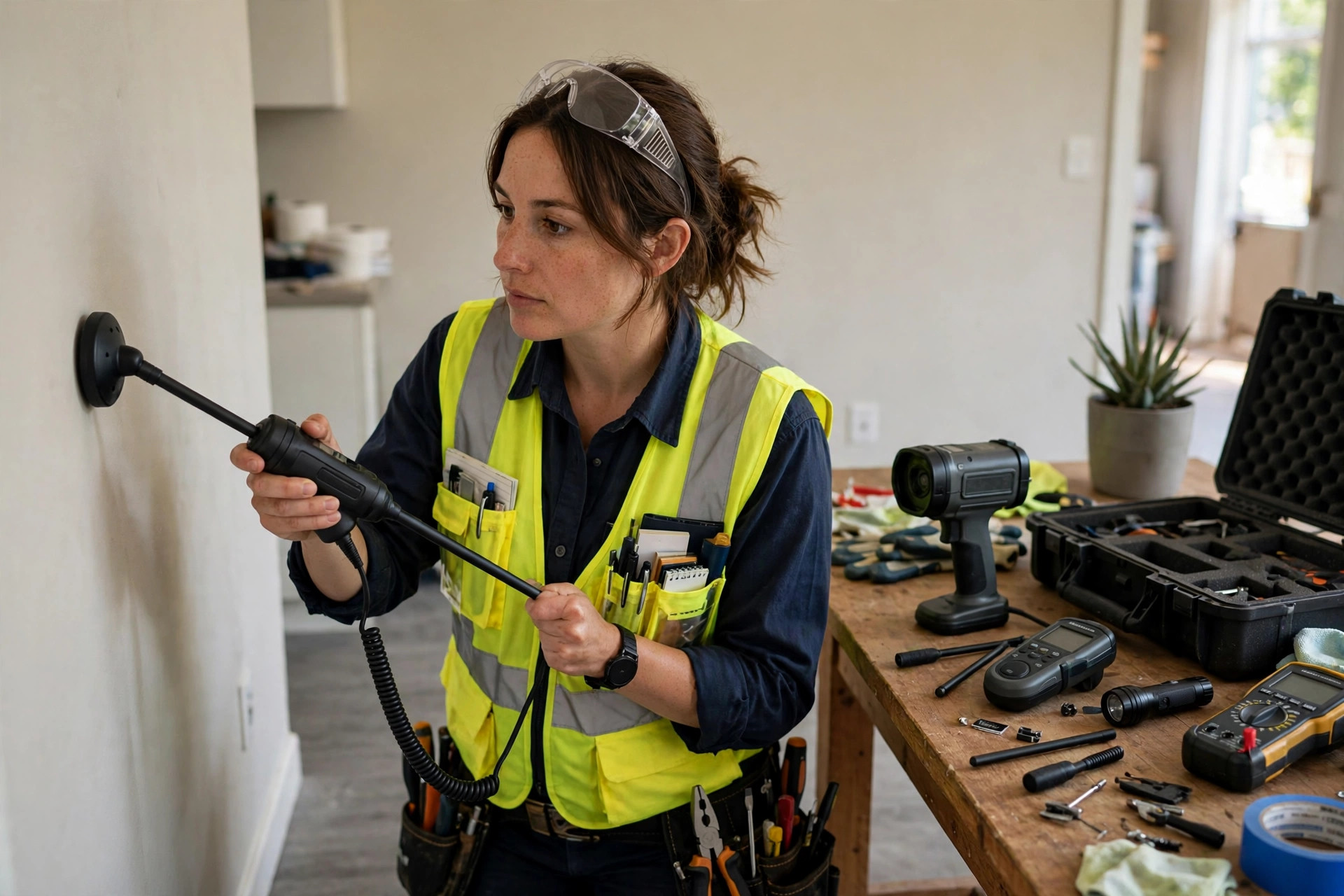
Water escaping from a pressurised pipe makes sound — a hiss, a whoosh, or a vibration that travels along the pipe and through the floor. Acoustic listening equipment picks that sound up through the surface: a sensitive ground microphone or listening disc pressed to the floor, the wall, or the pipe itself, with headphones that let the technician hear what the ear alone cannot. By moving the sensor along the pipe run and comparing how loud the sound is at each point, the leak can be narrowed down to within a short stretch.
Acoustic detection works best on metal pipes, which carry sound well, and in a quiet house — running appliances, traffic, and air conditioning all compete with the leak's signal. It is the oldest of the three methods and still the first tool reached for on many slab and underground leaks, because it follows the pipe itself rather than guessing from surface clues.
Thermal Imaging: Seeing the Temperature Trail
A thermal camera reads surface temperature and paints it as colour, so a hot water line leaking under a floor shows up as a warm trail spreading from the pipe, and a cold line shows as a cool patch against the warmer slab. The camera never sees the pipe itself — it sees the temperature pattern the water leaves on the surface above it — but that pattern is often enough to mark the leak's area without opening anything.
Thermal imaging is strongest on hot water leaks, where the temperature difference is large, and on leaks that have been running long enough to warm or cool the surrounding material. It is weaker on very small leaks and on cold lines in cool weather, where the difference is faint. Our thermal imaging guide explains the method in more depth, including the conditions that make its pictures clearest.
Tracer Gas: Following the Gas to the Hole
When a leak is too small to hear and too faint to see, tracer gas takes over. The water line is drained, and a safe mix of hydrogen and nitrogen — the same blend used to test gas lines — is pumped in under low pressure. The gas is far lighter than water, so it escapes through the leak, rises through the floor or soil, and is picked up at the surface by a sensitive sniffer that reacts to hydrogen alone.
Tracer gas shines where the other two methods struggle: tiny leaks, plastic PEX pipe that carries sound poorly, and lines buried deep under a slab. Because the gas escapes only at the hole, the sniffer's strongest reading marks the leak's exact point, not just its neighbourhood. The gas is non-toxic and dissipates quickly once the test is done. Our tracer gas leak detection page covers when this method is the right call.
Why Pros Combine Methods
No single method answers every leak, and that is the point of combining them. Acoustic listening narrows the search to a stretch of pipe; thermal imaging shows how far the water has spread; tracer gas confirms the exact point. Each method checks the others: if the listening says here and the camera shows warmth in the same place, the technician can mark the floor with confidence instead of cutting twice.
Combining methods also protects the house. A detection that relies on one faint signal can point at the wrong spot, and every wrong opening is a floor or wall that has to be repaired for nothing. Two or three agreeing signals mean one opening, in the right place. That is why a thorough visit may take longer than a quick look — the time goes into being sure. The same layered approach applies across our acoustic and thermal imaging services, which are built to work together.
What the Technology Cannot Do
Detection technology is powerful, but it has honest limits. No method sees through every material: thick tile, dense stone, and deep soil all muffle sound, blur heat, and slow gas. A leak under a swimming pool deck or beneath a driveway is harder to pin down than one under a living-room slab. And no detector fixes anything — it finds the leak so a repair can be planned, which is a separate job with its own choices.
Results also depend on the operator. The equipment reports signals; the technician reads them, and experience is what separates a real leak signal from a hot-water line running normally or a draught cooling a patch of floor. If you want to know what a visit actually involves, our FAQ page walks through it step by step.
Frequently Asked Questions
Which method is best for a slab leak?
It depends on the pipe and the leak. Acoustic listening is often first on metal pipes; thermal imaging suits hot water lines; tracer gas is best for tiny leaks or plastic pipe. Many slab leaks are found by combining two methods.
Is tracer gas safe inside a home?
Yes. The mix is mostly nitrogen with a small amount of hydrogen — non-toxic, non-flammable at the concentrations used, and it dissipates quickly once the test is finished.
Does thermal imaging work on cold water leaks?
It can, but the picture is fainter. A cold leak shows as a cool patch against a warmer floor, so it works best when the surrounding material is warm enough to give a clear contrast.
Will leak detection damage my walls or floor?
No. Acoustic, thermal, and tracer gas methods are all non-invasive — sensors on the surface, a camera, and a gas sniffer. Nothing is cut open until the leak is found and the repair is agreed.
Hidden Leak Somewhere?
Listening, imaging, and tracer gas find it without tearing the house apart.
(623) 270-6035 Request a Quote