Monsoon Season and Hidden Water Leaks: Protecting Your West Valley Home
From mid-June through September, Arizona's monsoon turns calm desert skies into dust walls and sudden downpours. Here's how the season stresses roofs, slabs, irrigation, and walls — and how West Valley homeowners can catch hidden leaks before they spread.
- Practical homeowner guides
- Written by leak detection pros
- Sun City, AZ focused
What Monsoon Season Does to a Home
The North American Monsoon officially runs June 15 through September 30 in Arizona. Moisture streaming up from the south collides with desert heat, producing towering storms that can drop an inch of rain in minutes, drive outflow winds that top 60 mph in strong microbursts, and push walls of dust — haboobs — across the Valley. Most Sun City homes were built for dry heat, not sideways rain, so the season exposes every weak point at once: tired roof tiles, cracked stucco, aged flashing, and drainage that has not been truly tested in months.
Roof Vulnerabilities: Tiles, Flashing, and Drains
Concrete tile roofs dominate Sun City, and the tiles themselves usually outlast the underlayment beneath them. Monsoon wind lifts and shifts tiles, exposing underlayment that may already be brittle with age; flashing around vents, skylights, and chimneys works loose; and on flat or low-slope sections, clogged scuppers and drains turn a downpour into ponding water that hunts for the smallest seam. After any major storm, a visual check from the ground — look for slipped or missing tiles and debris piled against drains — is worth the few minutes it takes.
Saturated Soil and Your Slab
Desert soil does not absorb a sudden deluge gracefully. Water pools against foundations, saturates the ground under slabs, and in areas with expansive clay, repeated wet-dry cycles move the soil itself. That movement stresses the water and sewer lines running beneath your slab — the same lines most vulnerable to slab leaks. Poor grading that directs water toward the house, or downspouts that dump roof runoff right at the foundation, multiply the effect. If you notice new cracks in flooring or doors that start sticking after storm season, the soil movement — and possibly the lines beneath it — deserve a professional look. Learn more about our slab leak detection service.
Irrigation Systems Under Sudden Stress
Monsoon storms are rough on irrigation: pressure surges when valves slam shut, drip lines get exposed or crushed by wind-thrown debris, and valve boxes flood. Because the rain masks the symptoms, a cracked irrigation line can run for weeks unnoticed — showing up only as a soggy patch that never dries or a water bill that refuses to come back down. Walk your yard a day or two after a storm and look for standing water, unusually lush patches of grass, or erosion around heads and valve boxes. When the break is underground, underground water line leak detection can trace it without digging up the whole yard.
Wind-Driven Rain Finds Its Way Indoors
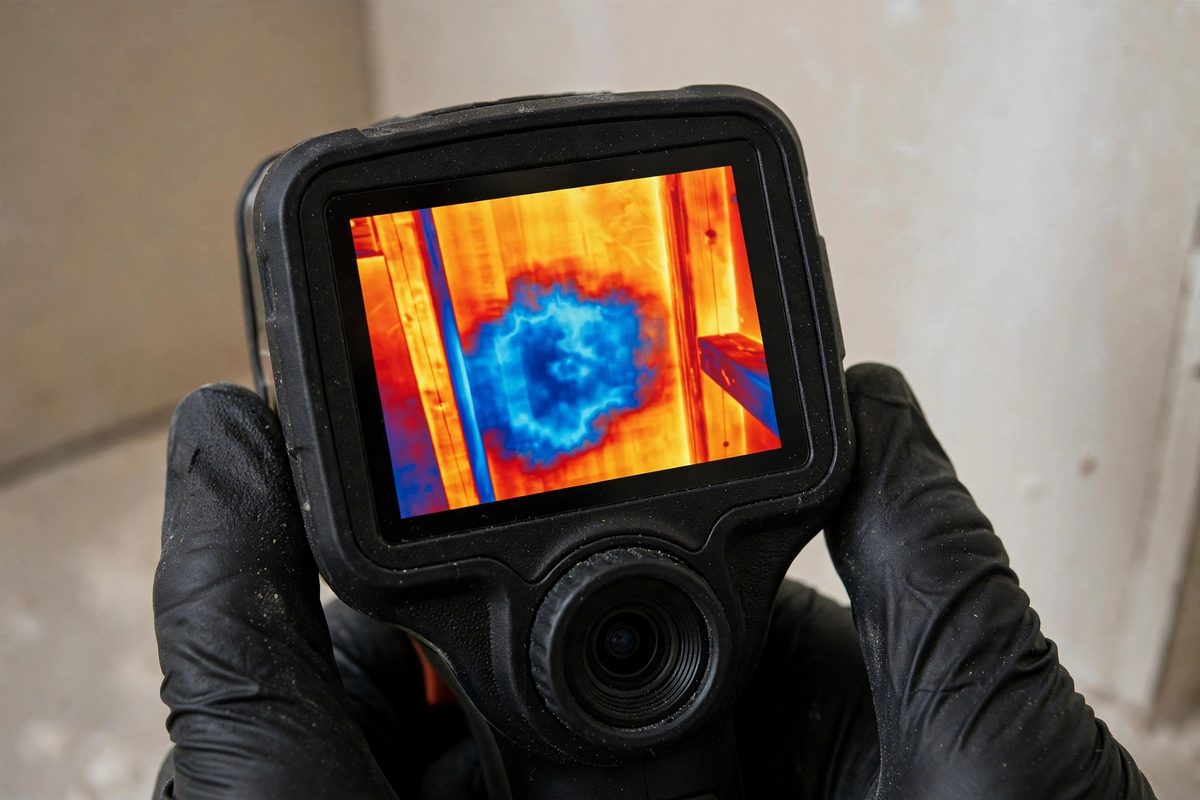
Monsoon rain rarely falls straight down. Driven by outflow winds, it pushes under eaves, around window frames, through hairline stucco cracks, and behind poorly sealed patio doors. The result is moisture trapped inside wall cavities that you cannot see — until paint bubbles, baseboards swell, or a musty smell appears weeks later. If a wall feels cool or damp to the touch after a storm, or you spot staining on a ceiling below a roofline, do not wait for it to "dry out on its own." Thermal imaging can reveal trapped moisture long before visible damage spreads, and our wall and ceiling leak detection service pinpoints the entry point so repairs stay small.
Pools, Spas, and Outdoor Plumbing
Monsoon debris clogs skimmers and overworks pumps, but the hidden risk is underground: saturated soil shifts pool plumbing and autofill lines, and wind-driven debris can damage exposed equipment connections. If your pool keeps losing water faster than evaporation explains in the days after a storm — the bucket test is the classic check — a leak rather than the weather is the likely culprit. Read more about pool leak detection if the water level will not hold.
Your Monsoon Leak Checklist
Before the season: clear roof drains, gutters, and scuppers; check grading so water flows away from the foundation; inspect visible flashing and sealant around vents and skylights; walk the irrigation system and repair weak heads and lines; and make sure everyone in the house knows where the main water shutoff is. During the season: after each major storm, do a ground-level roof check, walk the yard for soggy spots, and glance at ceilings and exterior walls for new stains. Small habits, big protection.
When to Call a Leak Detection Specialist
Monsoon damage is often invisible from the surface — moisture trapped in walls, a slab line stressed by soil movement, an irrigation break masked by rain. If stains appear, musty smells develop, your water meter moves with everything off, or a soggy patch outlasts the storm by days, professional detection finds the source without guesswork. Acoustic listening, thermal imaging, and pressure testing locate the exact problem so repairs open as little of your home as possible.
Frequently Asked Questions
When is monsoon season in Arizona?
The National Weather Service defines Arizona's monsoon as June 15 through September 30. The most active storm period is typically July and August, when moisture-fueled thunderstorms bring dust storms, high winds, and sudden heavy rain.
Can heavy monsoon rain cause a slab leak?
Rain itself does not break pipes, but saturated soil and the ground movement that follows can stress the water lines beneath your slab — especially older lines. Poor drainage that pools water against the foundation increases the risk.
How can I tell if monsoon rain got inside my walls?
Look for paint bubbling, baseboard swelling, musty odors, or cool damp-feeling spots on walls after a storm. Thermal imaging can confirm trapped moisture inside wall cavities before visible damage spreads.
Storm Season Exposing a Hidden Leak?
Monsoon damage often hides inside walls and under slabs. Call for a professional diagnosis before a small leak becomes a big repair.
(623) 270-6035 Request a Quote