Musty Smell or Mildew Spots? How Hidden Leaks Show Themselves
A musty smell that cleaning never quite removes is one of the most reliable early warnings of a hidden leak. The smell is dampness talking — here is how to trace it to its source.
- Practical homeowner guides
- Written by leak detection pros
- Sun City, AZ focused
Ventilation Problems vs Leak Problems
Not every musty room hides a leak, and telling the difference saves unnecessary work. Ventilation mustiness spreads evenly, improves when the room airs out, and returns slowly in humid weather. Leak mustiness concentrates in one spot, stays put regardless of ventilation, and comes with a damp patch, staining, or swelling somewhere nearby. Test it simply: air the room thoroughly and recheck the next day. If the smell is gone and stays gone, ventilation was the cause. If it returns to the same corner, the same cabinet, or the same stretch of baseboard, moisture is still feeding it from behind the surface, and a leak check is the right next step.
One last habit helps: after any plumbing repair, recheck the same spot a week later and again a month later. A patch that stays dry has a fixed source; a patch that dampens again means the repair missed the real break, and catching that early saves a second round of wall or floor damage.
Follow the Smell to the Dampest Spot
Start by finding where the smell is strongest: inside a cabinet, near a baseboard, in one corner of a room, or in a closet that shares a wall with a bathroom or kitchen. Dampness concentrates near its source, so the strongest smell usually sits closest to the leak. Check the wall and floor in that spot for staining, swelling, peeling paint, or grout that stays dark. A smell that appears after rain points to a different source than one that never changes — a constant smell points to plumbing, not weather.
Mildew Patterns That Point to Plumbing
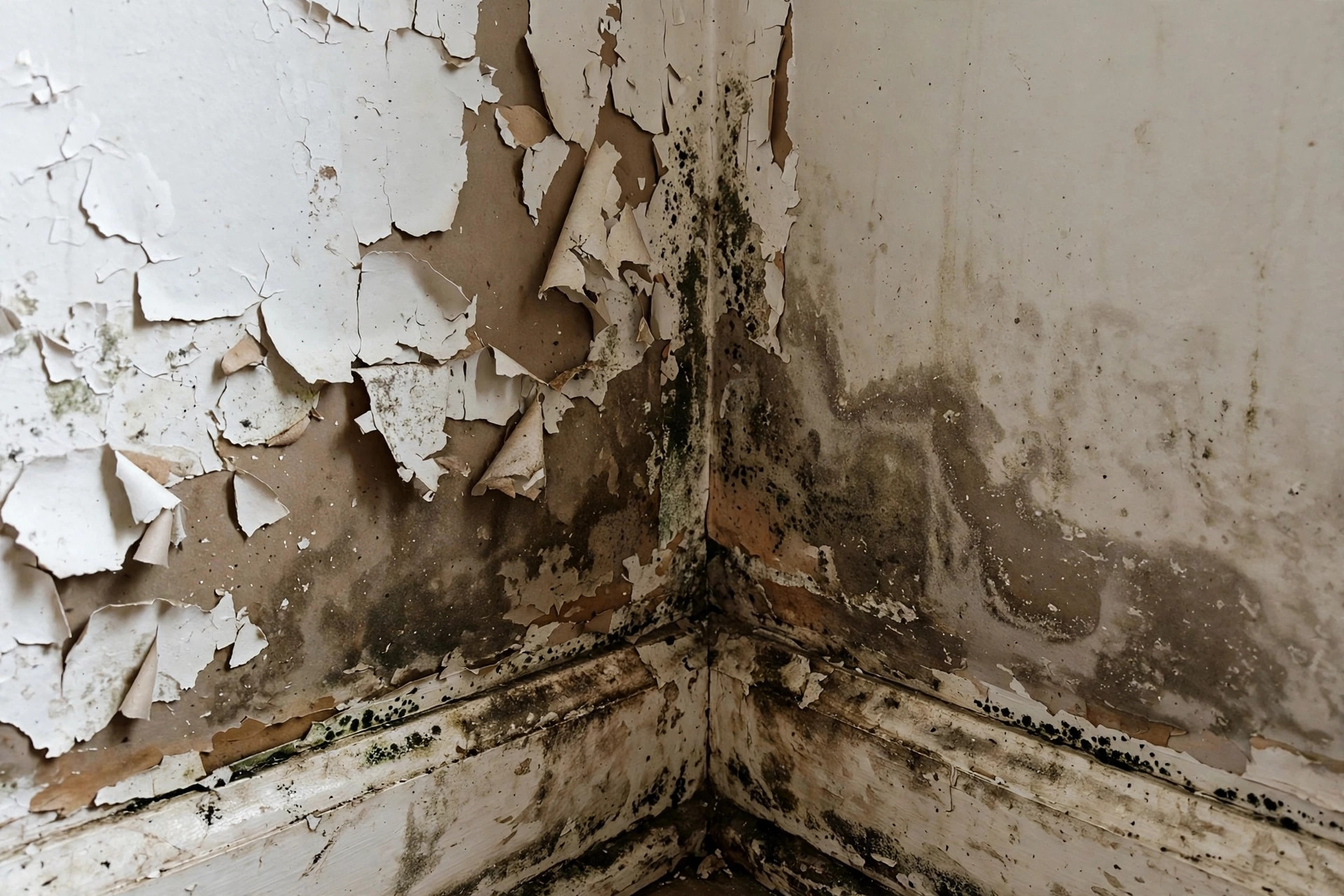
Mildew that grows in one patch — low on a wall, behind a vanity, under a sink, or around a toilet base — usually marks a steady moisture source behind it. Mildew spread evenly across a whole room more often reflects humidity or ventilation, but a single stubborn patch that returns after cleaning deserves a leak check. Do not just scrub the spot and move on: the moisture feeding it is still there, and the wall behind it keeps getting wetter.
Cabinets, Closets, and Shared Walls
Check inside cabinets on walls shared with bathrooms and kitchens, and inside closets that back onto plumbing. A damp cabinet floor, warped shelving, or a musty smell inside a closed cabinet all point to a pipe in that shared wall. Because the leak sits behind the wall, the dampness often appears in the room next door rather than in the bathroom itself — which is why a wall leak detection check is useful when the damp room has no plumbing of its own.
When Dampness Reaches the Slab
In slab homes, a leak under the floor can show as a musty room, a warm or damp patch of flooring, or mildew low on a wall with no plumbing nearby. A slab leak check uses acoustic listening and thermal imaging to find the break without lifting floors at random. Our water leak detection service covers the same ground for wall and slab sources alike.
What to Do When You Find Dampness
Dry what you can, note exactly where the dampness sits, and check your water meter with everything off — a meter that still moves confirms water is escaping somewhere. Our FAQ page explains what a detection visit looks like, so you know what to expect before anyone arrives.
Frequently Asked Questions
Does a musty smell always mean a leak?
Not always — humidity and poor ventilation can cause mustiness too. But a smell concentrated in one spot, or one that survives cleaning, points to a steady moisture source worth checking.
Why does mildew keep returning in the same spot?
Because the moisture feeding it is still there. Scrubbing removes the growth, not the source; a recurring patch usually means a leak behind the wall or floor.
Can a leak cause a smell in a room with no plumbing?
Yes. Water travels along walls and under slabs, so dampness often appears in the room next to the bathroom or kitchen rather than in it.
Should I open the wall to look?
Opening walls at random rarely finds the leak and adds repair work. Acoustic and thermal detection pinpoint the source first.
Musty Smell That Cleaning Never Removes?
A stubborn musty spot usually means steady dampness behind a wall or floor. Call for precise detection before it spreads.
(623) 270-6035 Request a Quote