Smart Water Leak Detectors: Sensors That Catch Leaks While You Are Away
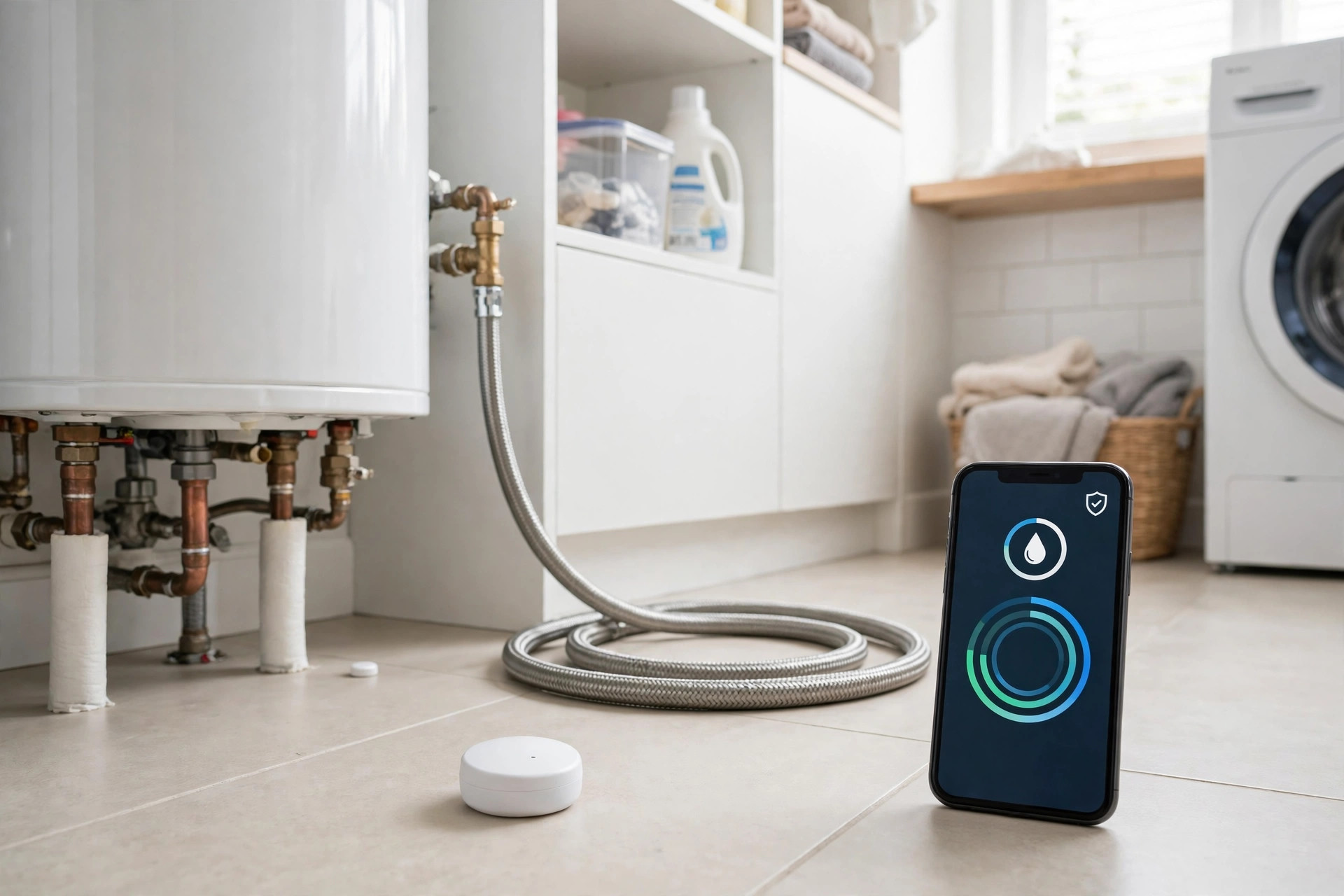
A smart water leak detector is a small sensor that sits where water should never be — under the water heater, behind the washing machine, beneath a sink — and alerts your phone the moment it gets wet. For a Sun City homeowner, especially one who travels, that early warning can be the difference between a mop and a major repair.
- Practical homeowner guides
- Written by leak detection pros
- Sun City, AZ focused
How a Leak Sensor Actually Works
Most sensors are simple by design: two metal contacts on the base detect water the instant it bridges them, and the device sends an alert over Wi-Fi or a home hub to your phone. Better models also track temperature and humidity, so a sensor in a garage can warn of freezing conditions as well as water. Battery-powered sensors last a year or more, and the alert usually arrives within seconds of contact — far faster than any routine check would find the same leak.
The value is not the gadget itself but the time it buys. A washing machine hose that bursts while nobody is home can run for hours; a sensor under the machine turns that into a phone alert within seconds, and a neighbour or family member with a key can reach the shutoff before the water reaches the next room. Sensors do not stop leaks on their own — unless paired with an automatic shutoff valve — but they remove the worst part of a hidden leak, which is how long it runs unnoticed.
Where to Place Sensors for Real Coverage
Start where Sun City homes actually leak: under the water heater, behind the washing machine, under kitchen and bathroom sinks, beside the dishwasher, and near the refrigerator water line. Add the air-conditioning condensate drain area, the water softener, and any upstairs bathroom floor that sits over a finished ceiling below. One sensor per risk point is the honest rule; a single sensor in the hallway protects nothing.
Placement details matter more than the brand. The sensor must sit flat on the floor where water would pool first, not on a shelf or on top of a drain pan lip. Keep it clear of stored boxes and cleaning supplies that could lift it or block the contacts, and test it every few months by touching a damp cloth to the contacts — a sensor nobody tests is a decoration. Homes left empty for weeks, a familiar pattern for snowbird and vacation homeowners, benefit most, because nobody is there to notice a damp floor.
Sensors, Shutoffs, and What They Cannot Do
A sensor only reports; an automatic shutoff valve acts. Paired systems close the main water supply when a sensor trips, which is the strongest protection for an empty home. Standalone sensors still help enormously when someone nearby can respond, but be honest about the gap: an alert at 2 a.m. to a phone hundreds of miles away only helps if someone local holds a key and knows where the shutoff is.
Sensors also cannot find leaks that never reach a floor. A slow drip inside a wall, a pinhole leak in a buried line, or a slab leak may never touch a sensor at all — those still need professional water leak detection with listening and thermal equipment. Think of sensors as a tripwire for appliance and fixture leaks, not as a replacement for inspection. The two approaches cover different leaks, and a careful homeowner uses both.
Choosing a Sensor Without Overpaying for Features
Look first for reliability basics: a loud local alarm as well as a phone alert, long battery life, and a clear signal in the spot where it will sit — a sensor in a metal-lined utility closet may need a hub nearby. Wi-Fi models are simplest for most homes; hub-based systems suit larger properties and keep working if the Wi-Fi drops. Temperature sensing is genuinely useful in a garage or an unheated utility room during a desert cold snap.
Skip features that sound impressive but add little: whole-home water usage analytics will not find a drip under a sink, and a sensor that needs a subscription to send alerts is a sensor that stops working when the subscription lapses. Buy one sensor for each risk point before buying a fancier model for one. If you are unsure which spots in your home carry the most risk, our FAQ page covers the common leak locations and what a detection visit checks.
A Simple Setup Routine for Sun City Homes
Walk the house once with fresh eyes and list every appliance and fixture connected to water — water heater, washer, dishwasher, fridge line, softener, sinks, toilets, condensate drain. Place a sensor at each one, label it by location in the app, and write down where the main shutoff is for whoever might respond to an alert. Test every sensor, then set a calendar reminder to test again each season and replace batteries yearly.
For homes across the West Valley, including Peoria, the same routine applies, and the payoff is identical: a leak found in minutes instead of weeks. Sensors are not a guarantee — no device is — but for a modest outlay they remove the most expensive ingredient in water damage, which is time. Pair them with an annual visual inspection and you have covered both the leaks you can see and the ones that happen while you are out.
Frequently Asked Questions
Do leak sensors work without Wi-Fi?
Most need Wi-Fi or a hub to send phone alerts, though many still sound a local alarm without a connection. Hub-based systems are the better choice where Wi-Fi is unreliable.
Where is the single best place for a first sensor?
Under the water heater or behind the washing machine — both are common, high-volume leak sources. Add sinks and the dishwasher next.
Can a sensor prevent a slab leak?
No. Slab and buried-line leaks rarely reach a floor sensor. Those need professional detection equipment, not a surface sensor.
How often should I test my sensors?
Test with a damp cloth every few months and replace batteries at least once a year, even if the app still shows them as healthy.
Sensor Alert, or a Leak No Sensor Can Find?
Sensors catch appliance leaks fast. For hidden leaks inside walls, floors, or buried lines, detection equipment finds the source.
(623) 270-6035 Request a Quote