Signs of an Underground Water Line Leak in Your Yard
The water line between your meter and your house is buried, so a leak there can run for weeks before anyone notices. Here are the yard signs that give it away — and what to do when you spot one.
- Practical homeowner guides
- Written by leak detection pros
- Sun City, AZ focused
The Leak You Cannot See From the House
An underground water line leak is easy to miss because nothing inside the house looks wrong. There is no stain on a wall, no puddle on a floor, and the taps may still run normally. The line that carries water from the street meter to your home runs under soil, concrete, or landscaping, so leaking water simply soaks into the ground. In Sun City's dry climate, that makes the yard itself the best early warning system — if you know what to look for during a normal walk around the property.
A Patch of Lawn That Looks Too Good
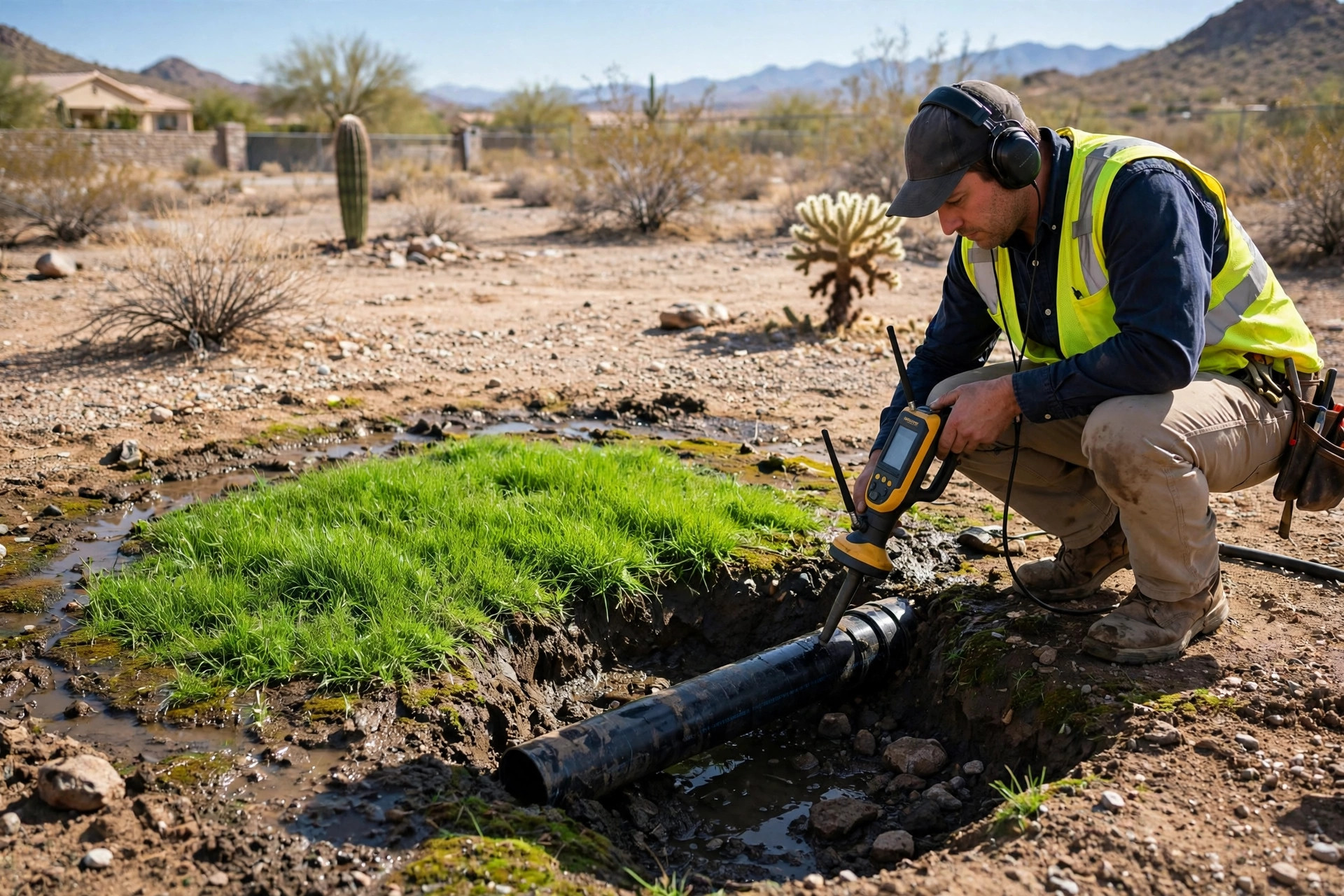
One of the classic signs is a strip or patch of grass that is suddenly greener, taller, or lusher than everything around it. A leaking line acts like an unintended irrigation system, feeding one area constantly while the rest of the yard stays dry. The same clue shows up in desert landscaping: a single shrub or tree that is thriving while its neighbours struggle may be sitting over a leak. If the lush patch follows a straight line from the street toward the house, that line is very likely the path of the buried water line.
Soft, Soggy, or Sinking Ground
Press the ground with your foot in any suspicious area. Soil that stays soft, spongy, or muddy days after the last watering or rain deserves attention, especially if it is warm to the touch in one spot. A leak can also wash soil away underground, leaving a shallow dip, a sinking section of walkway, or pavers that have shifted out of place. In dry Arizona soil, a patch that never seems to dry out is a strong sign that water is arriving from below rather than from above.
A Hissing, Bubbling, or Gurgling Sound
Stand quietly near the suspected area, ideally when the house is silent and no taps are running. A pressurised leak can produce a faint hiss, gurgle, or bubbling sound in the soil, and in a bad break you may even see water bubbling up through the ground. You can also listen at an outdoor faucet or at the meter box: a steady rushing sound when every tap in the house is off means water is moving somewhere it should not be. Do not dig blindly to chase the sound — a shovel can turn a small leak into a broken line.
Low Pressure, Air in the Pipes, or Dirty Water
A leak steals pressure from the rest of the system. If showers have weakened, a tap sputters with air, or water occasionally runs cloudy or discoloured, a buried line could be the cause. These symptoms have other explanations too — a failing valve or work on the street main can cause the same effects — so treat them as clues to investigate, not as proof on their own. When low pressure shows up together with a soggy patch or a greener strip of lawn, the case for an underground leak gets much stronger.
Confirm It With the Water Meter Test
The simplest confirmation is the meter test: turn off every tap, appliance, and irrigation zone, then watch the meter dial or low-flow indicator for 30 to 60 minutes. If it moves while nothing in the house is using water, water is escaping somewhere. A second check narrows it down: close the shutoff valve where the line enters the house. If the meter stops, the leak is inside; if it keeps moving, the leak is in the buried line between the meter and the house. That distinction tells a technician exactly where to start listening, and our FAQ page answers common questions about detection visits.
How Pros Pinpoint a Buried Leak
Professional underground leak detection works without trenching the whole yard. Technicians use acoustic listening equipment to hear the leak through the soil, pressure-test sections of the line to isolate the faulty run, and in some cases use tracer gas to confirm the exact spot. Once the break is pinpointed, the repair can stay focused on one small excavation instead of tearing up a driveway or a whole stretch of landscaping. If you spot the signs above — whether you live in Sun City, Sun City West, or Peoria — note where they are, take a photo for reference, and call for detection before the leak undermines a walkway or floods a neighbour's side.
Frequently Asked Questions
How do I know if a soggy patch is a leak or just overwatering?
Overwatering dries out within a day or two once the irrigation schedule changes, and it follows the sprinkler pattern. A leak stays wet in the same spot regardless of watering, often in a line running from the street to the house, and it may stay soft even in dry weather.
Can an underground leak damage my foundation or driveway?
Yes, over time. Escaping water can wash away supporting soil, causing walkways to sink, pavers to shift, and in longer-running cases, soil movement near a foundation. Early detection keeps the repair small and limits that kind of ground movement.
Should I dig up the area myself to find the leak?
No. Digging without knowing the line's exact depth and route risks cutting the pipe further, damaging irrigation wiring, or hitting a utility line. Mark the area, run the meter test, and let acoustic equipment pinpoint the break first.
My meter moves but my yard looks fine — what else could it be?
The leak may be under a driveway, a patio, or a concrete path where water cannot surface, or it could be a silent toilet leak inside. Closing the house shutoff valve separates an inside leak from a buried-line leak, which narrows the search considerably.
Soggy Patch or Greener Strip in Your Yard?
A buried line leak only gets worse underground. Call for precise, non-invasive detection before it undermines a walkway.
(623) 270-6035 Request a Quote