Water Heater Leak Warning Signs Sun City Homeowners Shouldn't Ignore
A water heater rarely fails without warning — it sends signals for weeks first. Here are the six signs your tank is heading for a leak, and the exact steps to take the moment you spot one.
- Practical homeowner guides
- Written by leak detection pros
- Sun City, AZ focused
Why Water Heaters Deserve Your Attention
Most water heaters sit quietly in a garage corner or closet for a decade, asking nothing — until the day they fail. And when a tank lets go, it doesn't drip politely: a 40- or 50-gallon tank can release its entire contents, and the supply line keeps refilling it until someone shuts the valve. In Arizona garages, where tanks sit on concrete that hides small seeps, the first visible sign is often damage to stored belongings or a musty smell drifting into the house. The pattern is predictable though: tanks almost always telegraph trouble first. A quick monthly glance at your water heater will do more for your home than most maintenance chores.
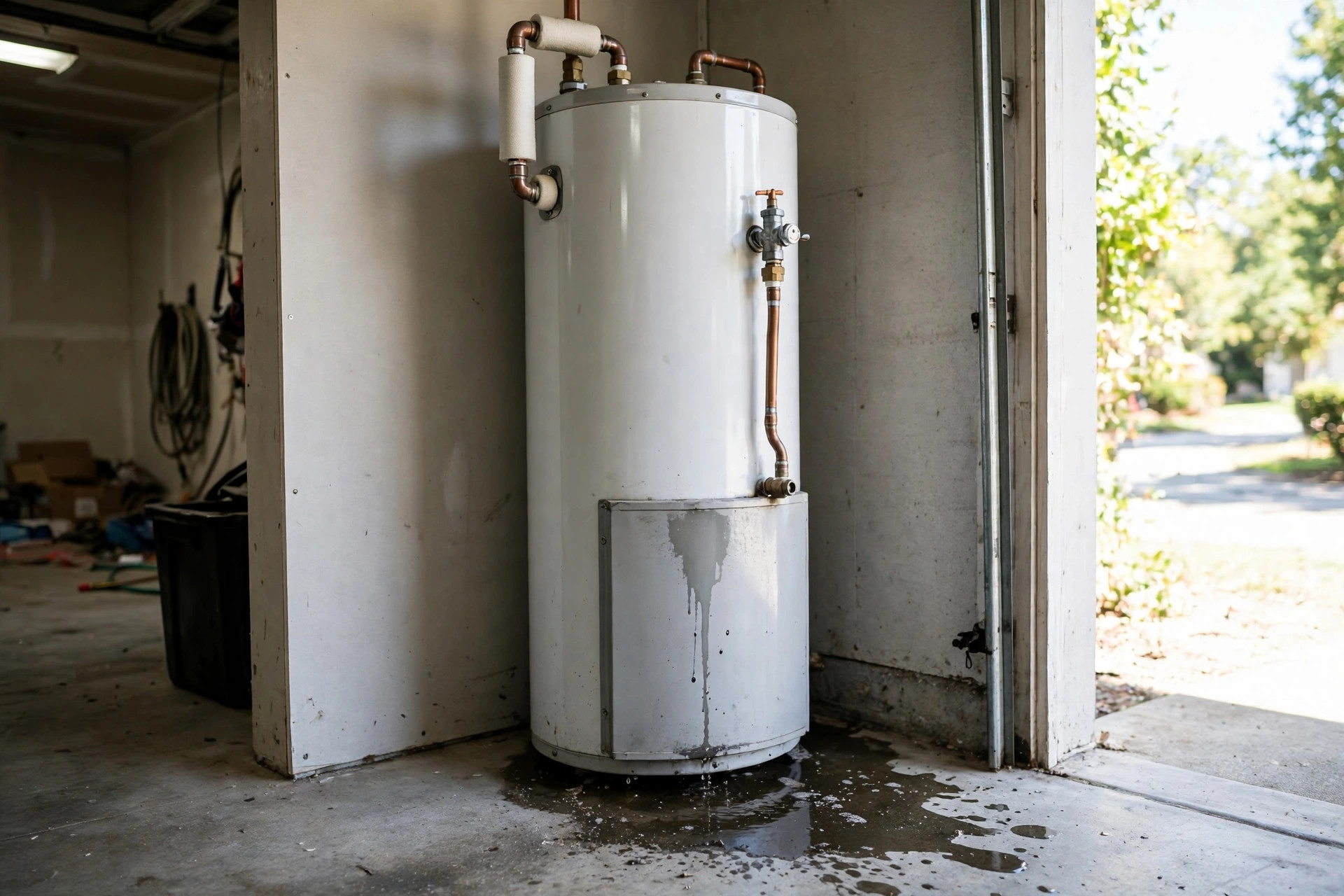
Sign 1: Water Pooling at the Base
This is the most urgent sign on the list. Any standing water or wet concrete around the base of the tank means water is escaping — from a tank fracture, a failing drain valve, or a corroded fitting. Small seeps wick into the concrete and evaporate in the Arizona heat, which is why they get missed; the puddle you can see is often only part of the story. Don't wait to see if it gets worse. A seeping tank can rupture at any time, so treat visible pooling as a same-day problem: shut off the water supply and get professional eyes on it.
Sign 2: Rust-Colored Hot Water
Run the hot tap for a minute and watch the color. If the water starts rusty and clears, corrosion is eating the inside of the steel tank. (If both hot and cold run rusty, the issue may be older galvanized house piping instead.) Tank interiors are glass-lined from the factory, but once that lining cracks — accelerated by Sun City's hard water — rust takes hold and keeps spreading. A rusting tank doesn't heal; it leaks eventually. Catching it at the discoloration stage gives you time to plan instead of reacting to a flood.
Sign 3: Corrosion on Fittings and Valves
Walk around the tank and look at the plumbing where pipes enter the top: green or white crusty buildup on copper fittings, rust streaks down the tank jacket, or a corroded temperature-and-pressure relief valve. The T&P valve — the brass valve on the side or top with a discharge pipe — is a safety device: if it's dripping or crusted with mineral scale, it may be relieving excess pressure, which means something is wrong inside.
Sign 4: Popping, Rumbling, or Banging Sounds
Water heaters shouldn't sound like a kettle. Popping and rumbling come from steam bubbles forcing their way through sediment baked onto the bottom of the tank — and Sun City's hard water makes sediment buildup faster than in many parts of the country. Sediment overheats the bottom of the tank, weakening the steel over time and contributing directly to tank failure.
Sign 5: Hot Water That Runs Out Too Fast
A tank that used to carry the whole family through showers and now goes lukewarm after one bath is telling you something. Heavy sediment buildup insulates the heating element or burner from the water, so the tank holds less usable hot water — and that same sediment is stressing the tank walls. Declining hot-water capacity plus the tank's age is a combination that shouldn't be ignored.
Sign 6: The Tank Is Past Its Prime
Find the rating plate on the tank and read the manufacture date: most conventional tank water heaters are designed for about 8–12 years of service. Past that range, internal corrosion commonly reaches the point where failure comes with little warning — the tank looks fine on Friday and floods the garage on Tuesday.
What to Do the Moment You Spot a Leak
First, shut off the cold-water supply valve on the pipe entering the top of the heater. Second, turn off the energy source: the gas valve to "pilot" or "off" for gas heaters, the dedicated breaker for electric ones. Third, connect a garden hose to the drain valve at the bottom and drain the tank to a safe spot outside or a floor drain — relieving the tank stops a seep from becoming a flood. Finally, call for professional help the same day. And if the source of moisture is ambiguous, the water meter test can confirm whether water is actively escaping, and professional leak detection can trace it before the damage spreads.
Frequently Asked Questions
Is a small puddle under my water heater an emergency?
Treat it as urgent, not wait-and-see. A small seep can be a tank fracture or failing valve that lets go without warning, releasing 40–50 gallons. Shut the cold-water supply valve above the heater and the gas valve or breaker, then call for help the same day.
What does rusty hot water mean?
Rust-colored water from hot taps only usually means the inside of the steel tank is corroding. Run the hot water for a minute: if the rust clears and returns, it's likely the tank, not the house piping. Corrosion is a leading reason tanks start leaking.
Why does my water heater make popping or rumbling sounds?
That's trapped steam escaping through sediment baked onto the bottom of the tank — common in hard-water areas like Sun City. Sediment accelerates wear on the tank lining and can contribute to leaks, so persistent rumbling deserves a professional look.
My water heater is 12 years old but works fine — should I worry?
Yes. Most conventional tank heaters last 8–12 years; past that point, internal corrosion often reaches a critical stage with no warning. Check the manufacture date on the rating plate, inspect the base monthly, and have a plan for what to do if it starts leaking.
Seeing Water Around Your Water Heater?
Don't wait for a small seep to become a flood. Call for a precise, non-invasive diagnosis.
(623) 270-6035 Request a Quote