Garage Leaks in Sun City: Water Heaters, Washers, and Floor Drains
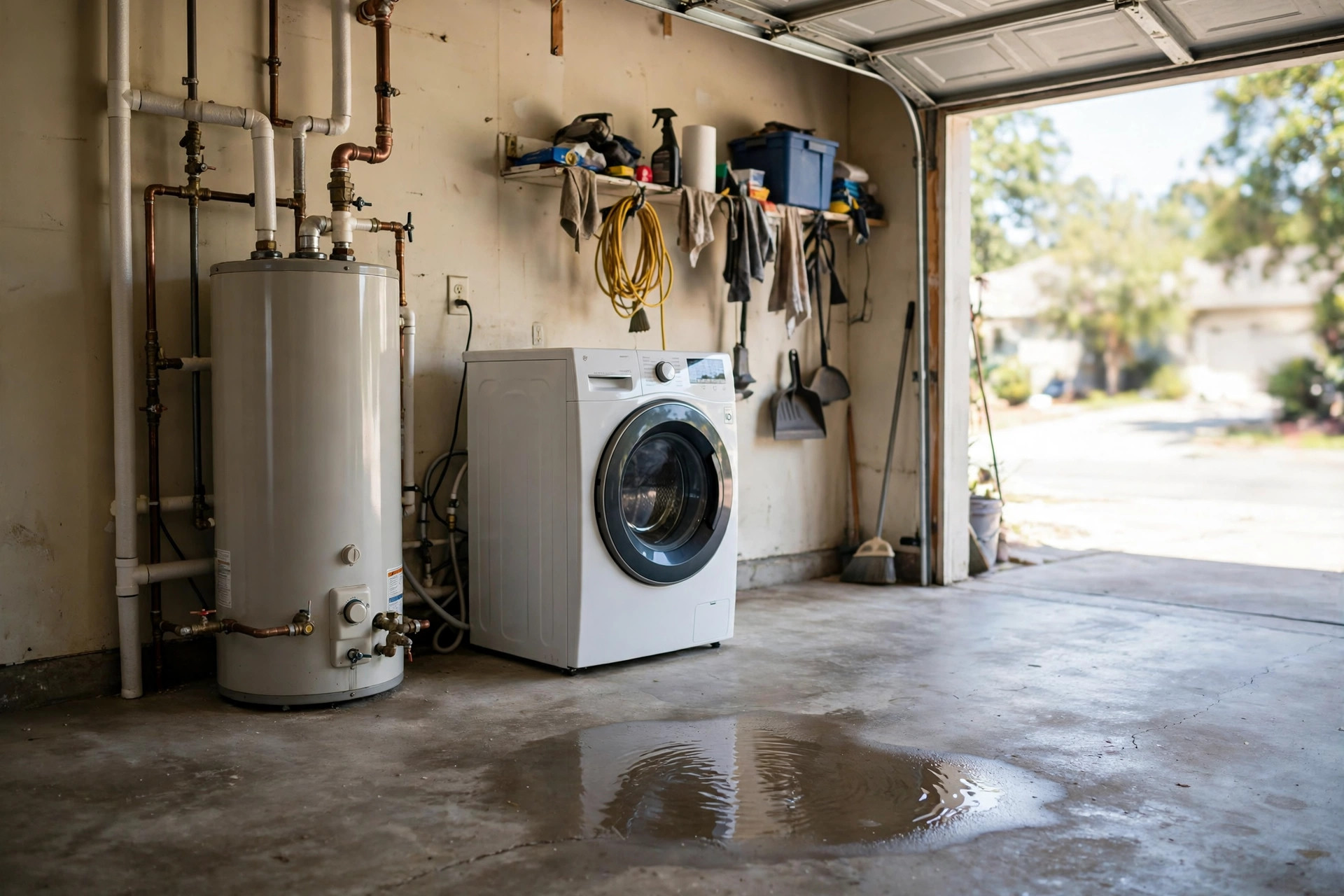
The garage is where leaks go unnoticed the longest. Water heaters, washing machines, utility sinks, and softeners all live there in many Sun City homes, and the floor is bare concrete that hides a slow drip behind stored boxes, shelving, and a parked car. By the time a garage leak is obvious, it has often been running for weeks.
- Practical homeowner guides
- Written by leak detection pros
- Sun City, AZ focused
Why Garage Leaks Stay Hidden So Long
A garage leak has everything working in its favour. Bare concrete absorbs a slow drip instead of showing it, and a dark stain on a grey floor is easy to walk past. Boxes, shelving, and a parked car cover the exact spots where water collects, and most people pass through the garage for seconds at a time — to the car and back — without ever looking behind the water heater or under the washer.
The garage also hides the early warnings other rooms give. There is no carpet to go soft, no painted wall to stain, and no one sleeping nearby to hear a drip. The first sign is often a smell, a patch of floor that never seems to dry, or a cardboard box that has gone soft at the base — and by then the water has had weeks to work.
The Water Heater: The Usual Suspect
In most Sun City homes the water heater sits in the garage, and it is the first place to look. Check the base for rust streaks and the floor around it for a damp ring that never fully dries. Look at the drain pan underneath, if there is one: water sitting in the pan means something is already leaking, even if the floor looks fine. Follow the pressure-relief discharge pipe to where it ends — it should run to a drain or outside, not drip onto the floor.
Listen, too. A faint hiss near the heater, or the sound of water running when no tap is open, is worth investigating rather than dismissing. Our water heater leak guide covers these signs in detail, including the difference between normal condensation and a real leak.
Washers, Utility Sinks, and Floor Drains
The washing machine is the garage's second usual suspect. Its hoses age like any rubber hose: they bulge, crack, and eventually split, usually at the connections. Check both hoses where they meet the wall valves and the machine, and look at the drain standpipe — if the washer's drain water backs up and overflows, it leaves a ring of damp around the base that is easy to mistake for a plumbing leak.
Utility sinks add their own traps and supply lines, and the floor drain itself can be the source: a drain that backs up after rain or after the washer runs points to a blockage downstream rather than a supply leak. The same checks apply to the laundry setup wherever it sits — our laundry room leak guide covers washer hoses and drains in full.
Reading the Concrete: Stains, Cracks, and Damp Lines
Concrete tells the story if you know how to read it. A dark patch that stays damp days after the last rain, a white mineral crust along a crack, or a line of dampness following the edge of the slab all point to water coming from below or from a nearby appliance. Efflorescence — that white, powdery crust — is mineral left behind when water evaporates, and it marks where water has been travelling, even if the spot is dry today.
Check the cracks, too. A hairline crack that stays damp is different from a dry one: dampness in a crack means water is reaching it from somewhere, and in a slab home that somewhere can be a water line running beneath the garage floor. A slab leak under the garage announces itself exactly this way — a patch of floor that never dries, in a room nobody watches closely.
A Quick Monthly Garage Check
Five minutes a month is enough to keep garage leaks from running for weeks. Walk the perimeter and look behind the water heater and the washer. Touch the hoses and the floor at their bases — dampness you can feel beats a stain you can see. Glance at the floor drain and the discharge pipe, and check any boxes stored on the floor for soft bases.
Finish with the meter: with every tap closed, it should sit still. If it moves, water is going somewhere, and the garage is a good place to start looking. Homes across the area, including Sun City West, share the same garage layouts and the same hidden-leak risk. If the source is not obvious, professional water leak detection can find it — and our FAQ page explains how a visit works.
Frequently Asked Questions
Why is my garage floor wet if nothing is leaking?
Concrete can wick moisture from below, and condensation forms on cool slabs in humid weather. But a patch that stays wet for days, or returns after drying, usually means a real leak — check the water heater, washer hoses, and floor drain first.
Is a rusty water heater base a leak?
Rust at the base often means water has been sitting there, whether from a slow tank leak, a dripping valve, or condensation that never dries. It is worth a close look rather than a wait-and-see.
How do I know if the floor drain is the problem?
If water appears around the drain after the washer runs or after rain, and nowhere else is wet, the drain or the line beyond it is the likely source. A supply leak, by contrast, keeps the floor wet all the time.
Can a slab leak show up in the garage?
Yes. A water line running beneath the garage floor can leak upward through cracks and joints, leaving a damp patch that never dries. If the patch persists with the appliances ruled out, the slab line is the next suspect.
Puddle in the Garage?
Check the heater, the washer hoses, and the drain — then find the source before it spreads.
(623) 270-6035 Request a Quote